
Blog
Heat exchanger engineering guides, comparisons and maintenance know-how — written for plant engineers, buyers and operators worldwide.
 Heat exchanger supplier Indonesia: materials, documents and the enquiry file that survives an audit
A heat exchanger supplier Indonesia projects can audit is judged on the file, not the quote. The four sectors that set the specification, the material ladder from carbon steel to titanium, API 660 and ASME documents, TKDN, and packing that survives a tropical crossing.
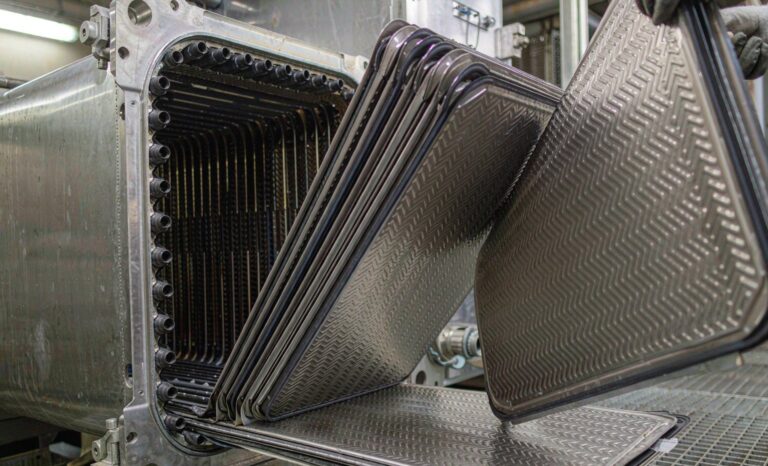 Why plate heat exchanger loses capacity: six causes in the order to check them
Why plate heat exchanger loses capacity is usually answerable from three readings taken with the unit running. Approach temperature, pressure drop and measured flow separate a moved duty point from a starved channel, a flipped plate, a fouling film, trapped air and a short plate pack.
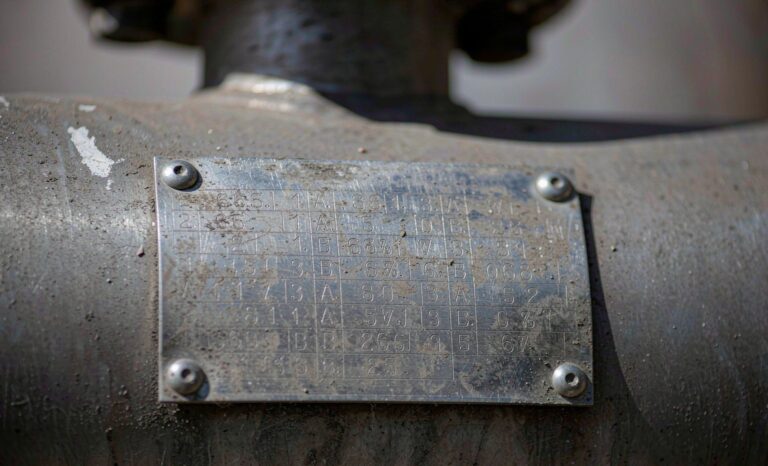 Heat exchanger nameplate requirements: what must be stamped, who signs it, and what a missing plate costs
Heat exchanger nameplate requirements cover both pressure chambers, not one. The fields that must be stamped, what UG-116 requires, what TEMA and API 660 add, the PED route, and how a design basis is rebuilt when the plate is gone.
 Heat exchanger supplier UAE: what to specify, what to verify, and how the Gulf duty changes the design
A heat exchanger supplier UAE projects can rely on is being asked a different question: 48 degree ambient, warm high-chloride seawater and a summer shutdown window. The eight enquiry fields, the materials ladder beyond 316, the fouling allowance, code route and the checks before the first order.
 Heat exchanger supplier Vietnam: the specification, the inspection and the sea freight
A heat exchanger supplier Vietnam buyers can rely on has to answer humidity, warm seawater and a design ambient that pushes air-cooled units past their nominal rating. The material ladder, the twelve specification fields, pre-shipment inspection and the import paperwork.
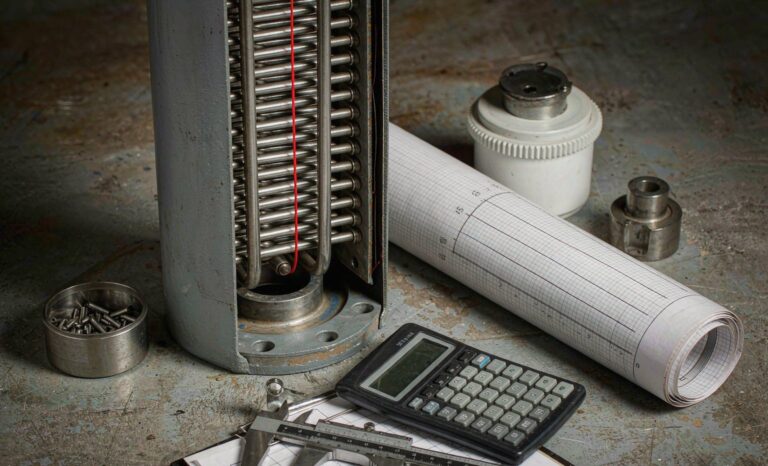 LMTD vs effectiveness NTU method: which to use, and where each one fails
The LMTD vs effectiveness NTU method question has a short answer: one sizes an exchanger, the other rates one. Both worked side by side on the same unit, where the LMTD form breaks at a temperature cross, why the F factor undersizes multipass shells, and how fouling hides inside U.
 Air source heat pump for electroplating plant: heating baths without cooking the chemistry
An air source heat pump for electroplating plant has to be selected for the bath, not the building. The four numbers that size it, indirect heating, coil corrosion, buffer storage and the temperature ceiling.
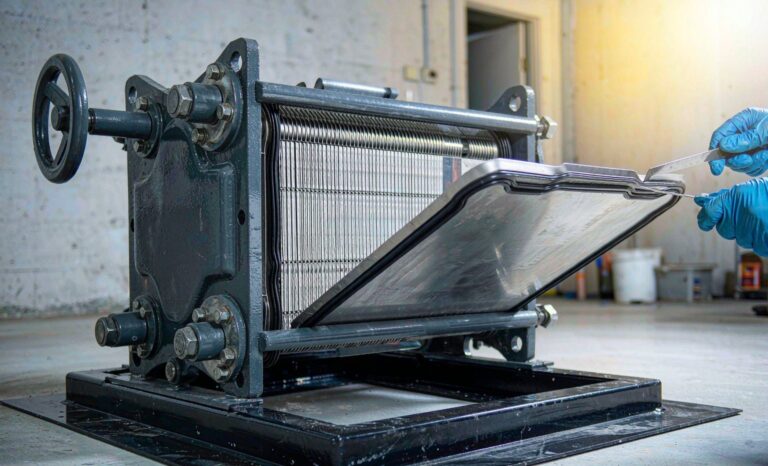 Heat exchanger gasket leaking repair: the five leak points, the dimension to record, and why the same leak returns
A heat exchanger gasket leaking repair fails for four reasons, and none of them is the gasket. The five leak points, the plate pack dimension to record before opening, torque sequence, elastomer choice and what a repeat leak tells you.
 Industrial heat pump water heater manufacturer: the specification that separates an engineered unit from a cabinet
Choosing an industrial heat pump water heater manufacturer comes down to specification. Refrigerant and delivery temperature, storage and legionella control, condenser materials, staging and the questions to ask.
 Heat exchanger fouling factor table: how to read the numbers and what they cost you
A heat exchanger fouling factor table is a design allowance, not a measurement. How to read the units, the typical values by service, why a bigger allowance can foul faster, and how to pick the right number.
 Waste heat recovery heat exchanger steel mill design: dew point, fouling and pressure drop
A waste heat recovery heat exchanger steel mill project fails on acid dew point, dust fouling or fan margin far more often than on heat duty. Where the heat is, how to size it, and the constraints that decide the design.
 PED 2014/68/EU heat exchanger compliance: categories, certificates and the file to demand
PED 2014/68/EU heat exchanger compliance is a route through the directive, not a certificate bought at the end of a project. Categories, modules, EN 10204 certificates and the seven questions to ask before accepting a CE mark.
 ASME Section VIII Div 1 heat exchanger design: what the code fixes and what it leaves to you
An ASME Section VIII Div 1 heat exchanger design is often treated as a check performed at the end of a project, when the mechanical drawings are already fixed. That…
 Heat exchanger tube bundle replacement service: when retubing beats a new shell
A heat exchanger tube bundle replacement service exists because the shell of a shell and tube unit usually outlives its tubes by a wide margin. The pressure boundary — shell,…
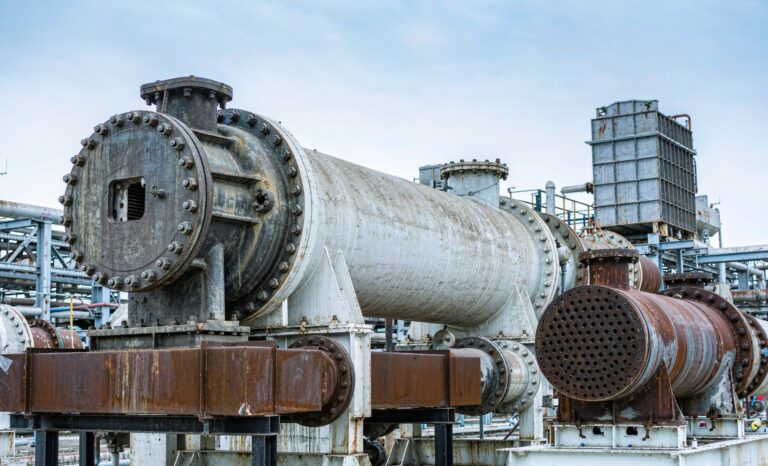 API 660 shell and tube heat exchanger requirements: what the standard fixes and what the buyer must specify
API 660 shell and tube heat exchanger requirements exist because a general pressure vessel code does not, on its own, produce an exchanger that a refinery can maintain. The code…
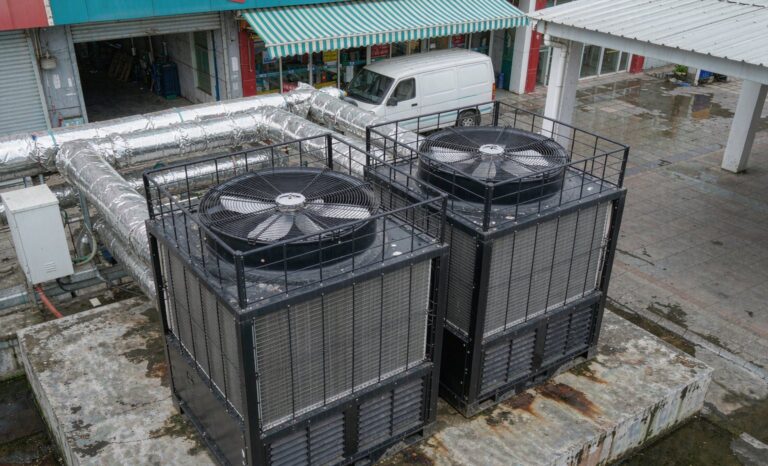 Air cooled screw chiller for supermarket refrigeration: the load a retail store actually has
An air cooled screw chiller for supermarket refrigeration is usually selected against a store's total refrigeration tonnage, and that is where the selection starts going wrong. A supermarket does not…
Zhenggong and Baode plate exchangers compared on plate thickness, gaskets, pressure rating, area definition, lead time and spare part availability.
Gasketed, brazed, welded and semi-welded plate exchangers compared: chevron angle, plate count, pressure drop, gaskets and when shell and tube wins.
Inside the Zhenggong heat exchanger factory in Shandong: what it builds, the D1 and D2 licences behind it, and how it compares with Foshan Ever.
What heat exchanger China for sale listings really mean, five traps that cost more than the discount, and the terms that protect a first order.
The four Chinese heat exchanger manufacturing clusters, how to read a D1 or D2 pressure vessel licence, and six checks that expose a trading company.
Indicative FOB price bands for Chinese heat exchangers in 2026, the six variables that move a quote, and a worked FOB to landed cost calculation.
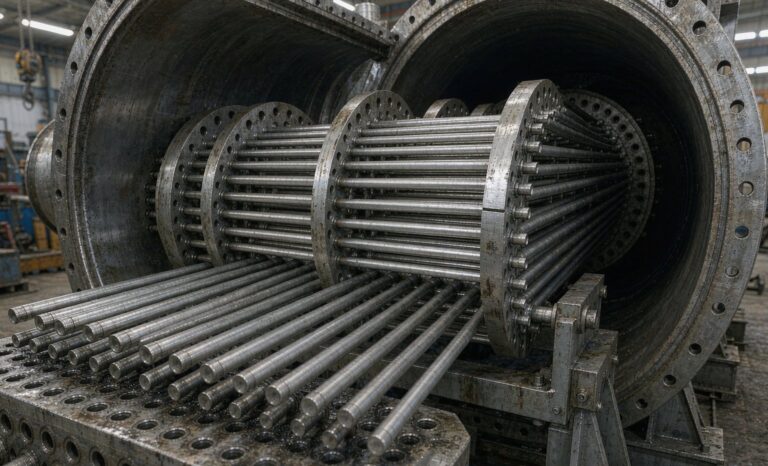 Shell and tube heat exchanger baffle spacing: how it is chosen, and what it costs you when it is wrong
Shell and tube heat exchanger baffle spacing is one of the first numbers fixed in a thermal design and one of the last anyone revisits, and it simultaneously controls the…
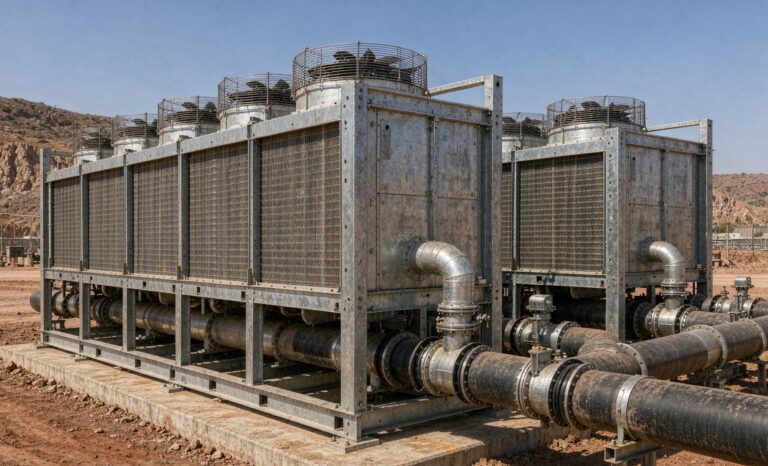 Air cooled screw chiller for mine cooling: load profile, ambient derating and the specification that survives the site
An air cooled screw chiller for mine cooling is usually bought against a single number — "we need 800 kW" — and then spends its life being asked to deliver…
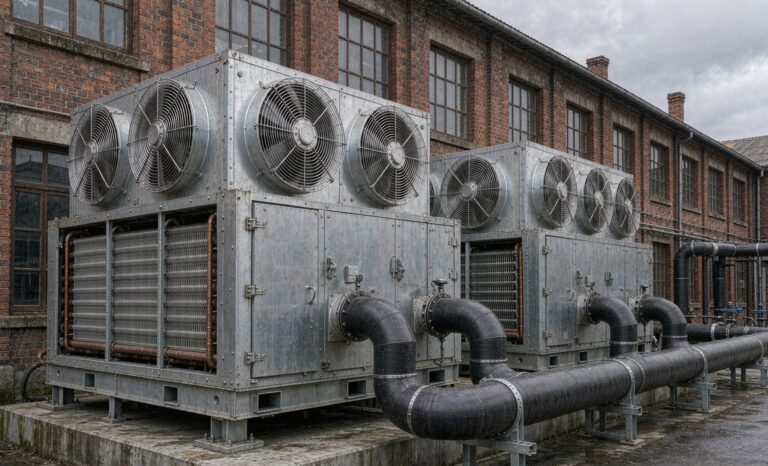 Air cooled screw chiller for a textile mill: load profile, humidity control and getting the size right
An air cooled screw chiller for a textile mill is usually bought to solve a temperature complaint and then spends its life being judged on humidity. That mismatch is where…
 Plate heat exchanger standard API 662: what it covers and how to specify a unit to it
The plate heat exchanger standard API 662 is the document most refinery plate units are bought against, and it is also one of the most loosely applied specifications in a…
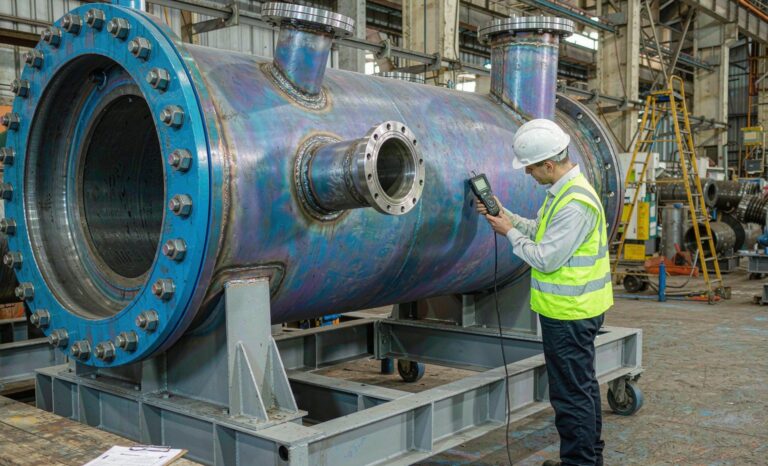 Heat exchanger third party inspection requirements: what a TPI witness point actually covers
Third party inspection on a heat exchanger is frequently bought as a certificate and delivered as a series of photographs of a nameplate. The gap between those two things is…
 Air source heat pump for dairy farm duty: sizing wash water, milk cooling and the lift
A dairy farm buys heat twice a day and throws it away twice a day. The milking plant chills milk from about 35 °C down to 4 °C and dumps…
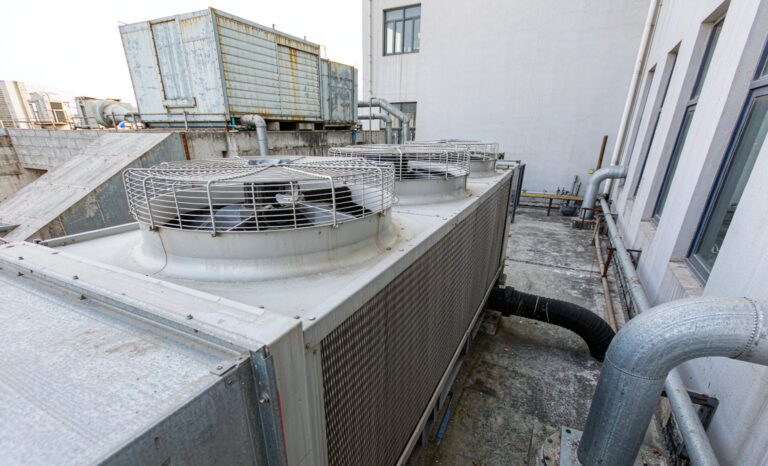 Air cooled screw chiller for a pharmaceutical plant: selection rules that survive an audit
An air cooled screw chiller for a pharmaceutical plant is usually bought for reasons that have nothing to do with the compressor. It is bought because the plant has no…
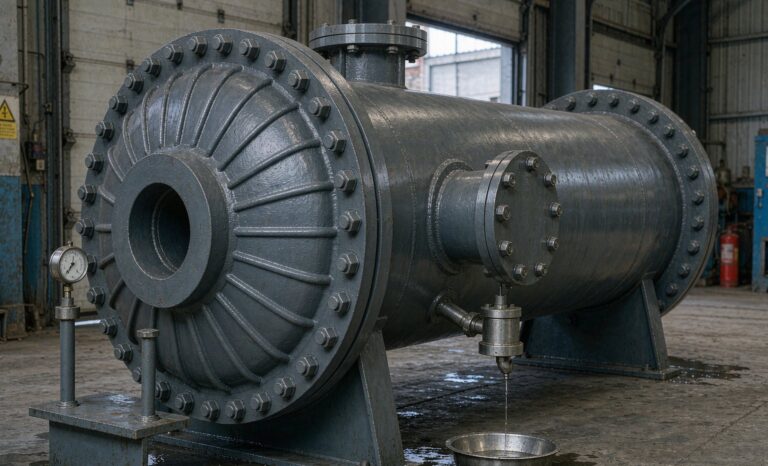 Heat exchanger hydrostatic test pressure under ASME: how the number is set
Heat exchanger hydrostatic test pressure under ASME is a calculated number, not a round one. It is derived from the maximum allowable pressure of the vessel, adjusted by the ratio…
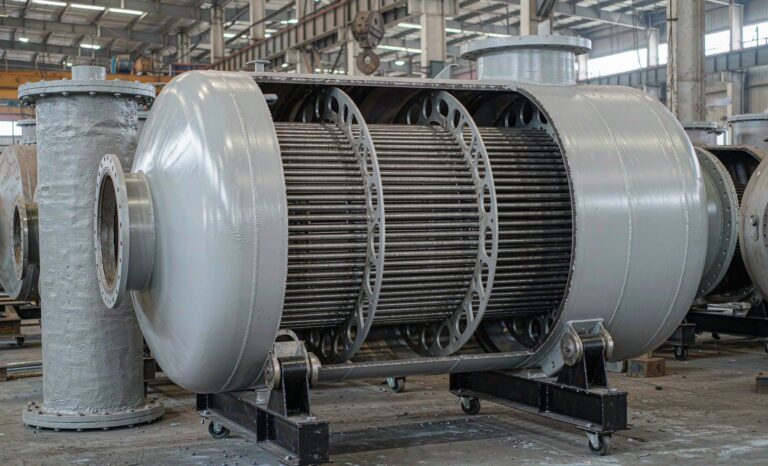 GB/T 151 shell and tube heat exchanger: what the Chinese standard actually requires
A GB/T 151 shell and tube heat exchanger is a unit designed and built to the Chinese national standard for heat exchangers, GB/T 151-2014, rather than to TEMA or ASME…
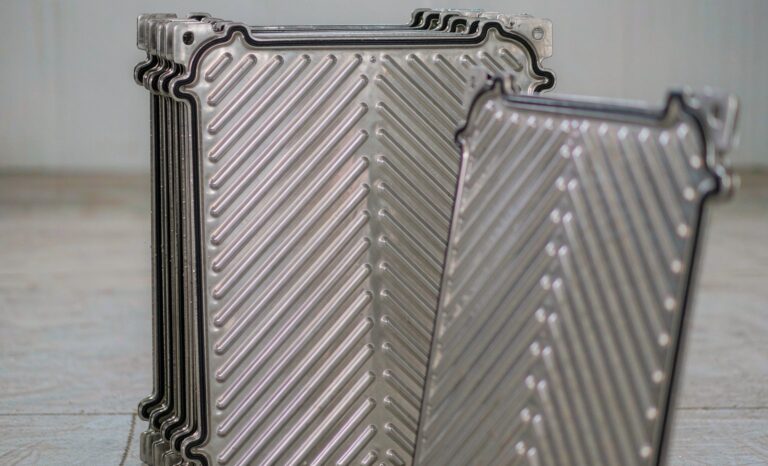 Alfa Laval plate heat exchanger plates replacement: measure the pack, do not guess it
Alfa Laval plate heat exchanger plates replacement is a dimensional exercise before it is a purchasing one. The plate is a stamped pressing, not a machined part: its duty is…
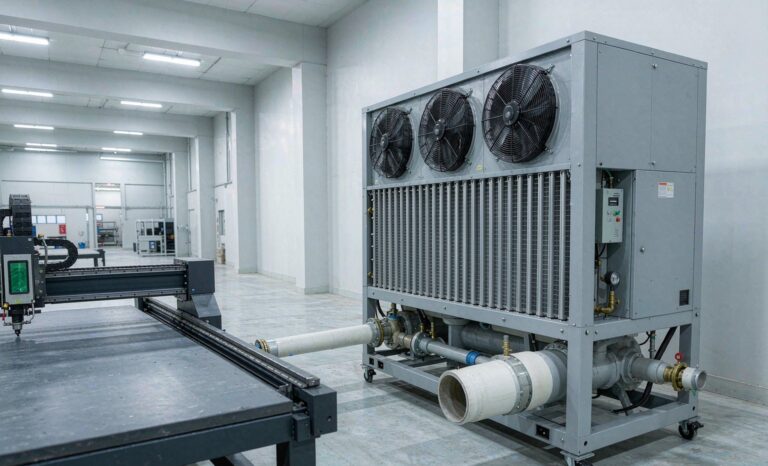 Air cooled screw chiller for laser cutting: sizing two loops, not one
A chiller for a fibre laser is almost never sized correctly by the number the laser is sold under. A 6 kW machine does not need 6 kW of cooling,…
 Schmidt plate heat exchanger plates: replacing a pack without losing duty
Schmidt packs turn up across European HVAC plant rooms, refrigeration systems and district heating substations, usually installed a decade or two ago and usually still carrying the original frame. When…
 Air cooled screw chiller for food and dairy: sizing around washdown and cold store loads
A chiller for a dairy or food plant is asked to do three jobs that an office cooling schedule never combines: hold a process temperature tightly, absorb a pulldown load…
 Hisaka plate heat exchanger plates: replacing a pack without losing duty
A Hisaka plate pack is replaced for one of two reasons: the plates are perforated or eroded through, or the gaskets have reached the end of their life and re-gasketing…
 TEMA vs ASME Heat Exchanger: Which Standard Governs Your Order
TEMA vs ASME heat exchanger: one is a legal code, the other a voluntary standard. What each covers, what is stamped and how to write the RFQ.
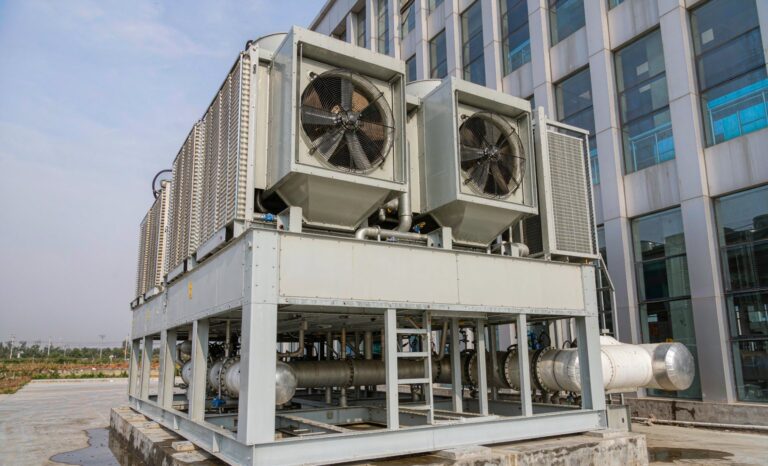 Air Cooled Screw Chiller for Data Center: Selection at High Ambient and Part Load
Air cooled screw chiller for data center selection: derating to 50 C ambient, part-load efficiency, free cooling hours and coil specification.
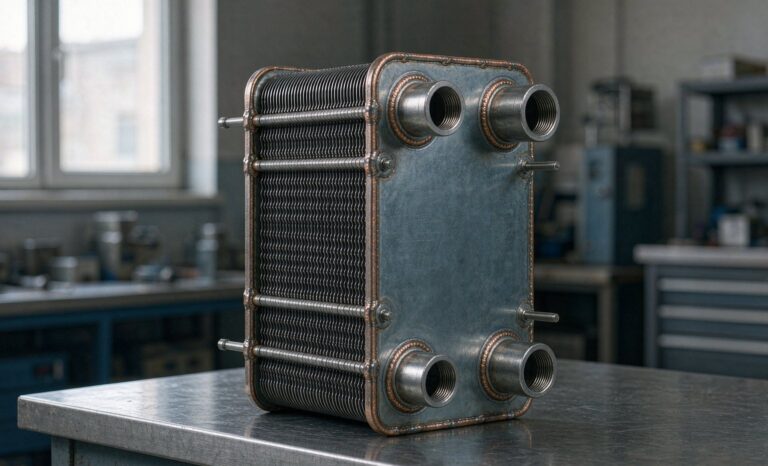 SWEP Plate Heat Exchanger Plates Replacement: Why Brazed Units Are Replaced, Not Re-Plated
SWEP plate heat exchanger plates replacement is not a plate swap. Why brazed units are replaced whole, and how to specify the exact drop-in unit.
 Condenser Approach Temperature Too High: Seven Causes and How to Diagnose Them
Condenser approach temperature too high? Work from the number to the cause: what approach should be, how to measure it, and seven causes ranked.
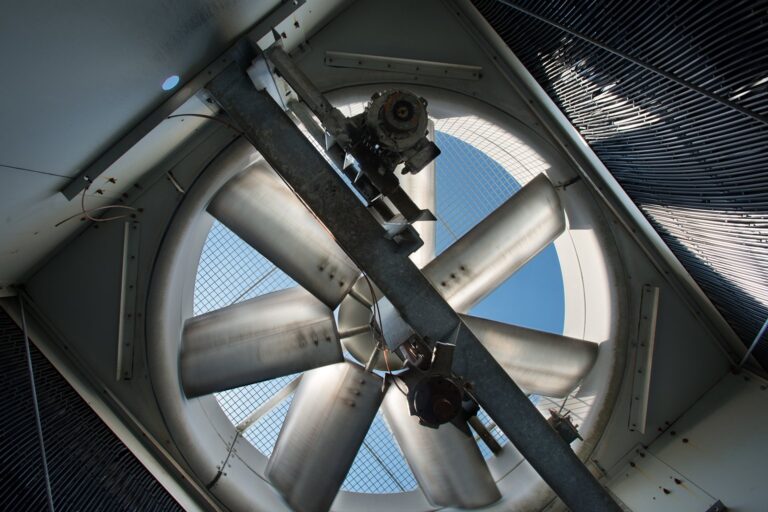 Air Cooled Screw Chiller for Cold Storage: Low Temperature Selection Guide
Air cooled screw chiller for cold storage: size for low evaporating temperature, ambient derating, glycol loops and modern low-GWP refrigerants.
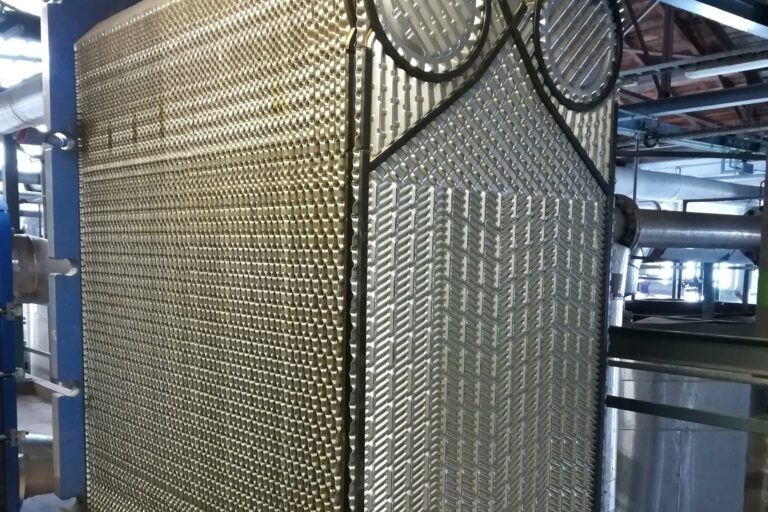 GEA Plate Heat Exchanger Plates Replacement: Identify, Verify and Rebuild the Pack
GEA plate heat exchanger plates replacement without guesswork: read the plate stamping, check plate thickness and close the pack to dimension A.
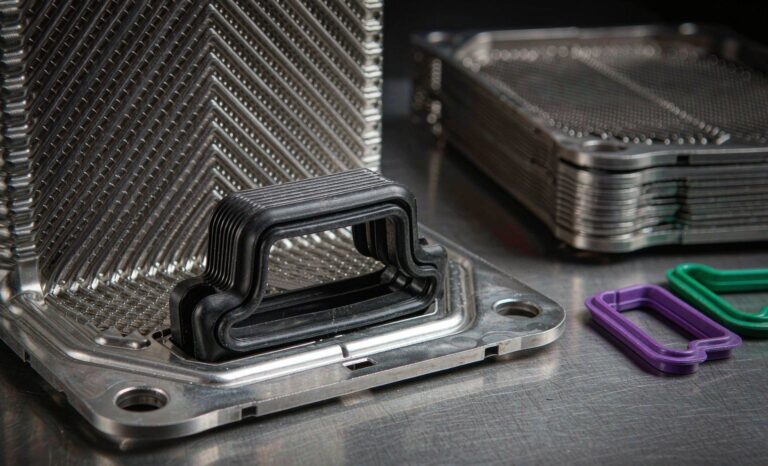 Plate Heat Exchanger Gasket Material Selection: Elastomer Matrix by Medium and Temperature
Plate heat exchanger gasket material selection: NBR, EPDM, HNBR and FKM temperature limits, plus the media matrix that decides which one survives.
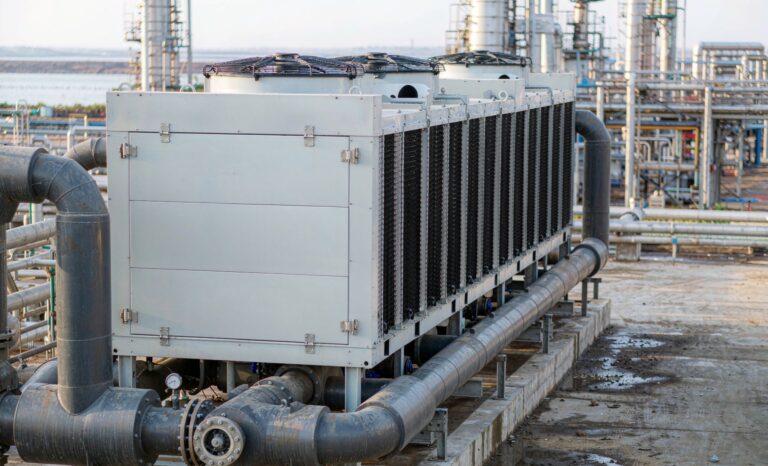 Air Cooled Screw Chiller for a Chemical Plant: Selection for Corrosive and Classified Sites
Air cooled screw chiller for a chemical plant: load profile, corrosion-rated coil, glycol derating and hazardous area checks before you order.
 Funke Plate Heat Exchanger Plates Replacement: Identify, Cross-Reference and Rebuild
Funke plate heat exchanger plates replacement: measure the plate, check thickness, match glued or clip-on gaskets and rebuild the pack correctly.
 Plate Heat Exchanger Fouling Cleaning Method: Choosing by Foulant Type
Plate heat exchanger fouling cleaning method chosen by foulant type: the chemistry, temperature and velocity that restore duty without damage.
 Air Cooled Screw Chiller for a Battery Plant: Load, Ambient and Heat Exchanger Selection
Air cooled screw chiller for a battery plant: real process loads, ambient derating, glycol selection and the condenser coil that decides uptime.
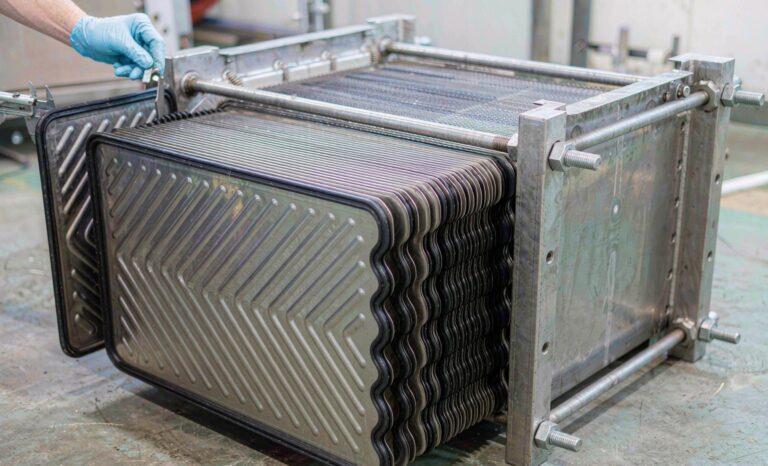 APV Plate Heat Exchanger Plates Replacement: Identify, Match and Rebuild the Pack
APV plate heat exchanger plates replacement: how to identify the plate pattern, match thickness and corrugation, and rebuild a pack that seals.
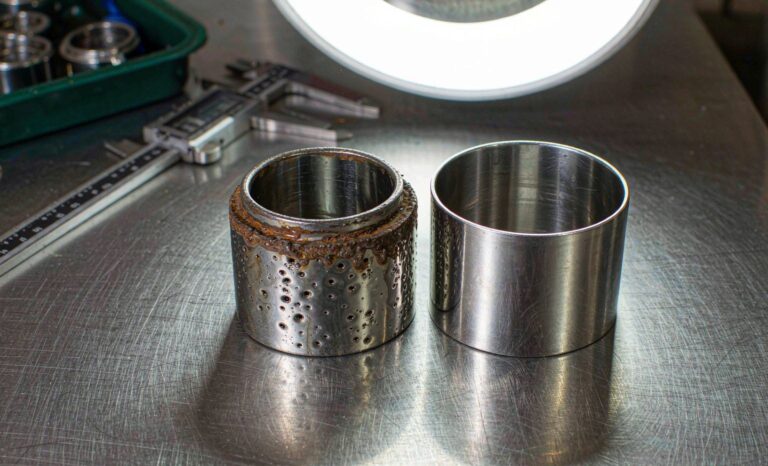 Heat Exchanger Material Selection for Corrosive Media: Alloy Matrix and Limits
Heat exchanger material selection for corrosive media: corrosion modes, alloy-by-medium matrix, velocity limits and cost of one grade too low.
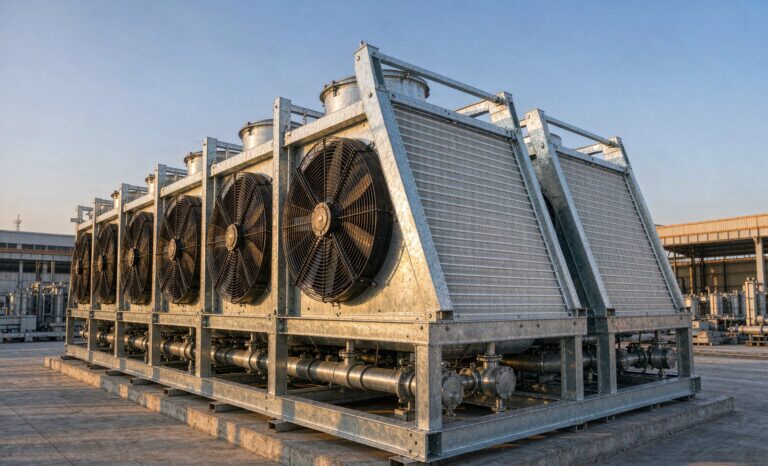 Air Cooled Heat Exchanger Dry Cooler Supplier: 12 Checks Before You Order
What to verify before you choose an air cooled heat exchanger dry cooler supplier: RFQ data, dry vs adiabatic modes, coil, certification and FAT.
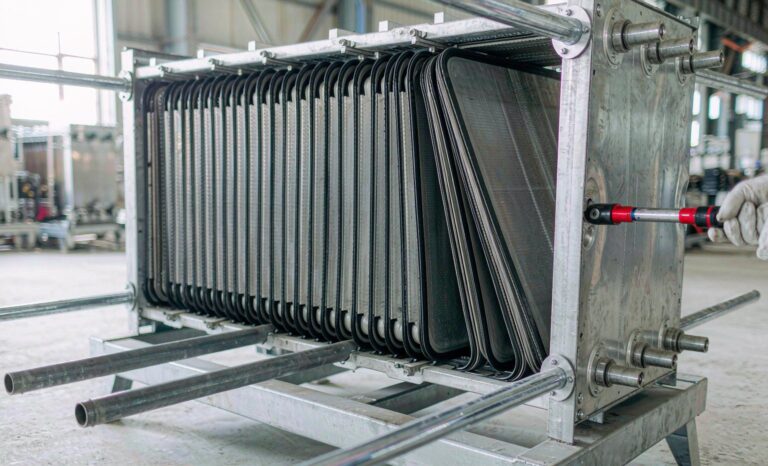 Alfa Laval Heat Exchanger Gaskets Replacement: Identify, Source and Fit
How to identify, source and fit Alfa Laval plate heat exchanger gaskets: model codes, clip-on vs glued, materials, A-dimension and leak causes.
 Textile Wastewater Heat Recovery: Plate Exchanger Design for Dyeing Mills
Textile wastewater heat recovery for dyeing mills: exchanger type, fouling control, chloride limits, materials and payback on a 698 kW duty.
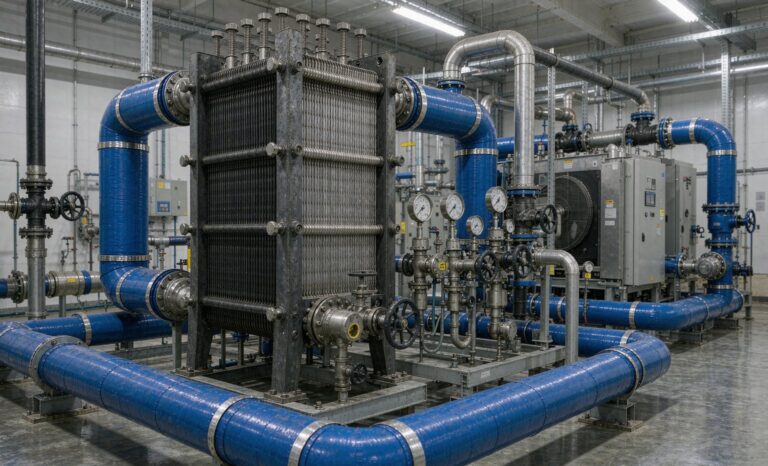 Data Center Heat Recovery: Turning Server Waste Heat into District Heating
Data center heat recovery design: recoverable heat by cooling type, heat pump temperature lift, sink matching and district heating payback math.
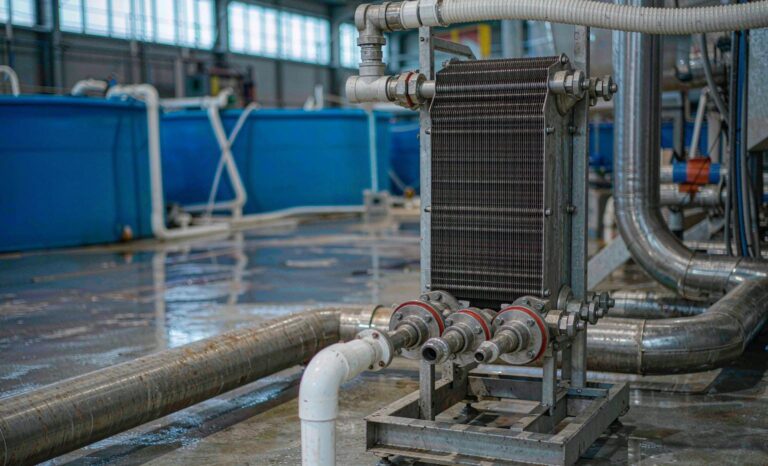 Aquaculture Heat Exchanger: Sizing for RAS, Hatchery and Seawater Farms
How to size an aquaculture heat exchanger for RAS, hatchery and seawater farms: heat loads, titanium plates, fouling factors and biosecurity.
Why cost per ton varies by a factor of four, where the money goes in a closed circuit tower, and the seven specification choices that set the price.
From thermal design to hydrostatic test and packing: what happens inside a pressure vessel factory, and the six things worth checking on a supplier audit.
Working limits for closed and open chiller loops: pH, conductivity, chloride, hardness and the tube velocity that decides whether a bundle survives.
Shell and tube lasts 20-30 years, plate 10-20 - but four specific failures decide which end you get. Including the repair-or-replace calculation.
A screw chiller explained from the rotor pocket outwards: how compression happens, why the slide valve limits turndown, and what an economiser buys.
Design U-values for 13 duties, from water-to-water at 800-1500 W/m2K to air coolers at 25-60. With the fouling allowances that make each number valid.
 Hydrogen Refueling Precooler: Heat Exchanger Selection for 350 and 700 bar Stations
Hydrogen refueling precooler selection for 350 and 700 bar stations: duty, pressure class, PCHE vs brazed plate and the traps to avoid.
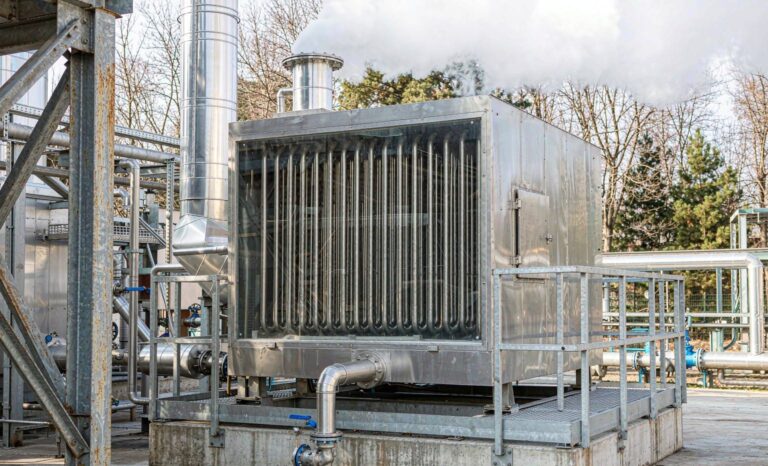 Biomass Flue Gas Condenser: Recovering Latent Heat Without Acid Corrosion
Biomass flue gas condenser design: latent heat recovery, acid dew point limits, material choices and payback for wood chip and straw boilers.
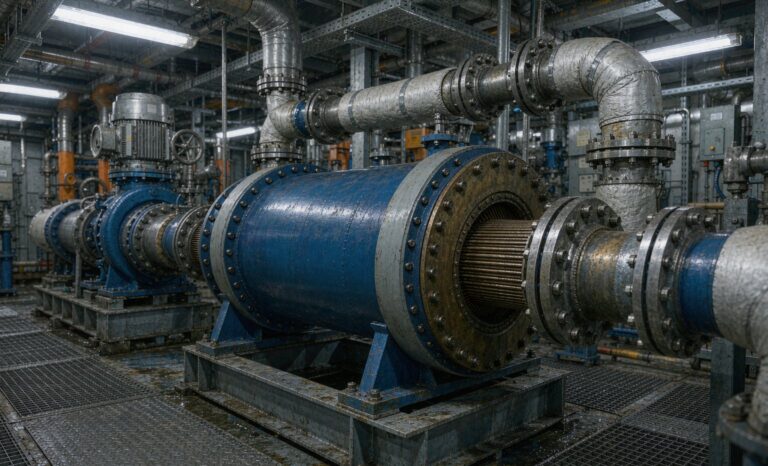 Marine Central Cooling Heat Exchanger: Sea Water Circuit Selection Guide
Marine central cooling heat exchanger selection: seawater materials, velocity limits, sizing numbers and the class documents a surveyor wants.
 Transformer Oil Cooler: ONAF and OFAF Selection and Sizing
How to select a transformer oil cooler: cooling class, losses, LMTD, surface area and derating, with radiator versus forced cooler compared.
 Carbon Capture Reboiler: Selecting the Amine Regeneration Heat Exchanger
How to select a carbon capture reboiler: configuration, heat flux limits, lean rich exchanger and a worked sizing example for amine regeneration.
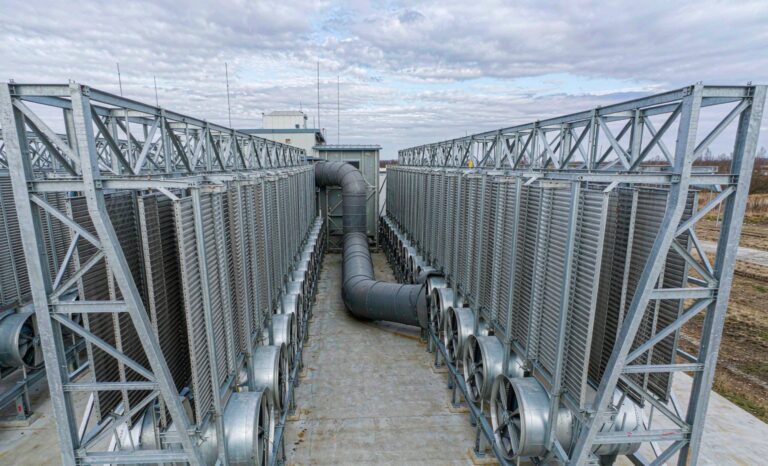 ORC Condenser Selection: Air-Cooled Sizing for Waste Heat Power
Selecting an ORC condenser for waste heat power: working fluid, condensing pressure, fan power and air-cooled surface sizing, with an example.
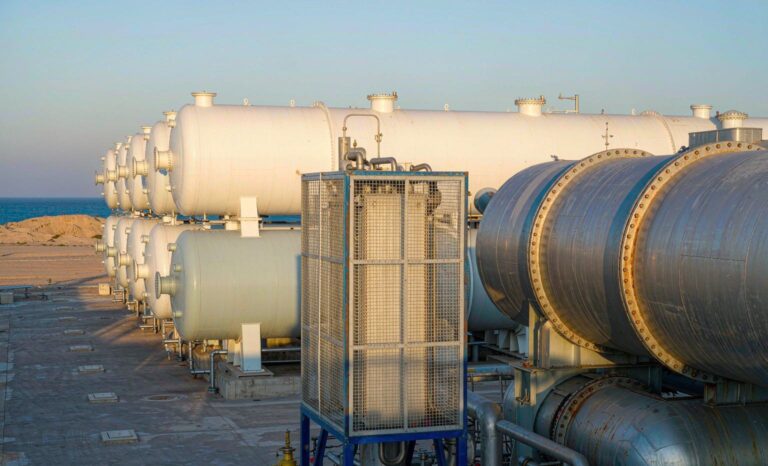 Desalination Heat Exchanger: MED and RO Selection, Materials and Sizing
How to select a desalination heat exchanger for MED and RO plants: alloy choice, velocity floors, scaling limits and brine heater sizing.
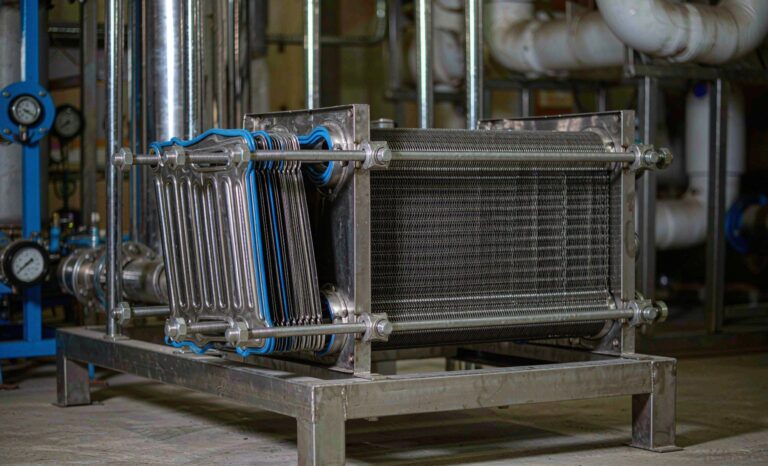 Plate Heat Exchanger Pressure Drop: How to Set and Diagnose It
How to set allowable plate heat exchanger pressure drop per side, calculate channel losses and diagnose a unit drifting above design.
 Shell and Tube Heat Exchanger Cost: What Drives Price per Square Metre
What a shell and tube heat exchanger costs in 2026: price bands per square metre by material, and the quote items buyers must compare.
 Mine Cooling Heat Exchanger: Surface Chillers, Bulk Air and Acid Water
Mine cooling heat exchanger selection: surface chilled water circuits, underground bulk air coolers, acid water materials and fouling control.
 Brewery Heat Exchanger: Wort Cooling, Glycol and CIP Selection Guide
Brewery heat exchanger selection: wort knockout loads, one or two stage cooling, plate and gasket choice, CIP intervals and the sizing numbers.
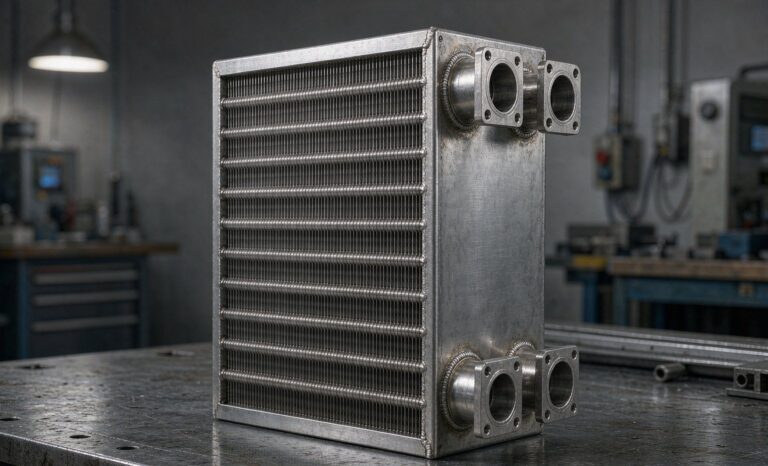 Brazed Aluminum Plate Fin Heat Exchanger: Selection and Sizing Guide
Brazed aluminum plate fin heat exchanger guide: fin types, alloy and pressure limits, fouling rules and the sizing inputs a fabricator needs.
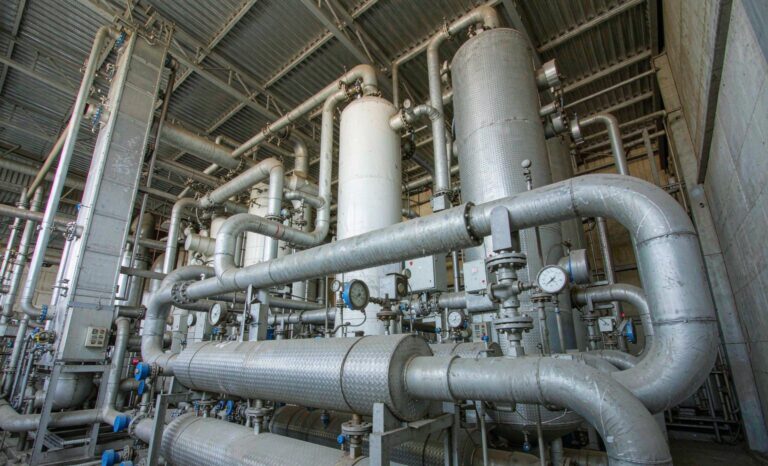 Ammonia Water Absorption Chiller: Heat Exchanger Selection Guide
Ammonia water absorption chiller exchanger selection: generator, absorber and recuperator duties, 12-16 bar design and copper-free materials.
 Brazed Plate Heat Exchanger Sizing: Plates, Ports and Pressure Drop
Brazed plate heat exchanger sizing: plate count, chevron pattern, port velocity and pressure drop, plus a worked 250 kW water-to-water example.
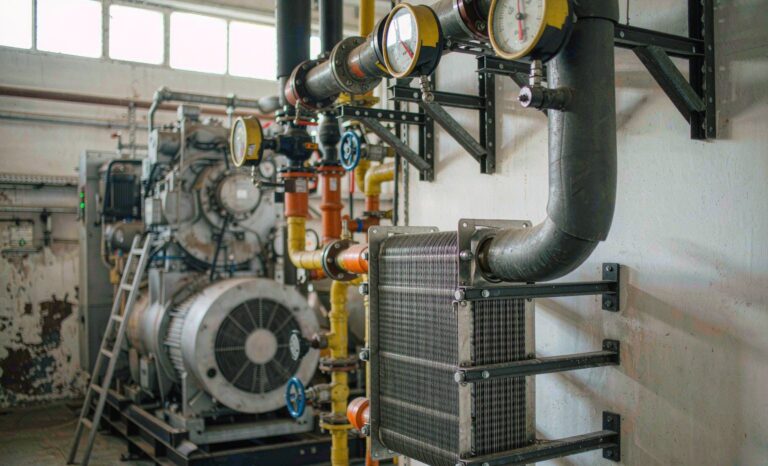 Compressor Oil Heat Recovery: Sizing the Recovery Exchanger
Compressor oil heat recovery: sizing the recovery exchanger for 50-70 C hot water, oil velocity limits, thermostatic control and the 70 C ceiling.
 Heat Exchanger Supplier in China: 9 Checks
How to vet a heat exchanger supplier in China: factory vs trader, licences, test records, drawings, lead time and the red flags to watch for.
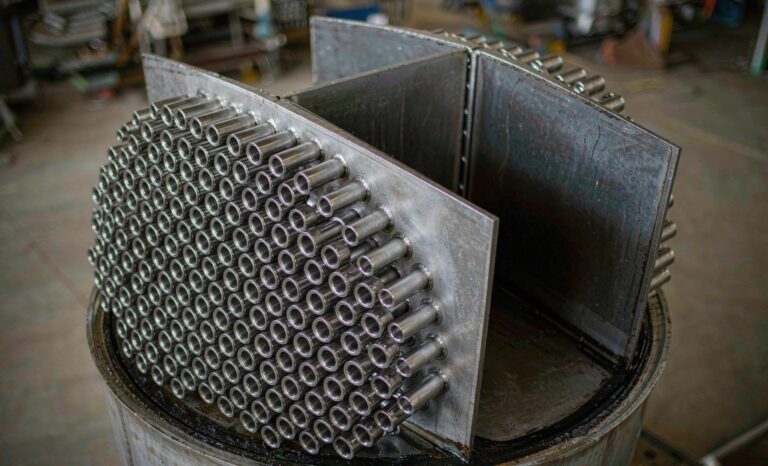 Shell and Tube Pass Arrangement: 1-2 vs 2-4 Pass Selection
Shell and tube pass arrangement explained: 1-2 vs 2-4 passes, LMTD correction factor, pressure drop penalty and the real cleaning consequences.
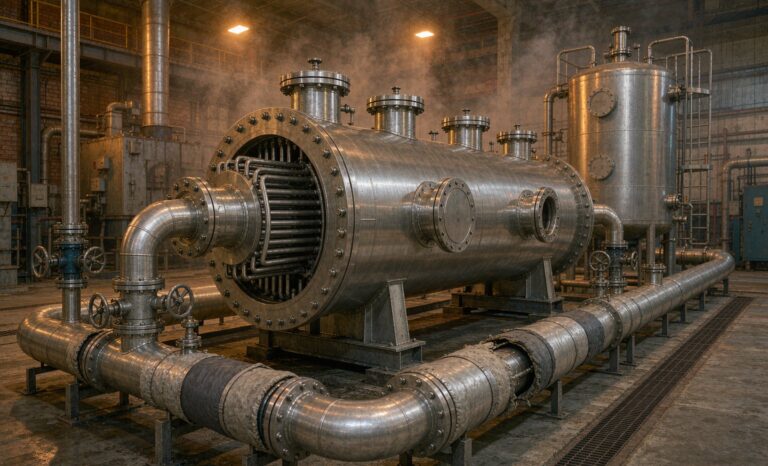 Steam Condensate Heat Recovery: Sizing the Cooler and Recovering Flash Steam
Steam condensate heat recovery sizing guide: flash fraction, condensate cooler duty, deaerator limits and an honest payback model for steam plants.
 District Cooling Heat Exchanger: Plate Selection for Plants and Substations
District cooling heat exchanger selection guide: approach temperature, plate or shell and tube, thermal storage, free cooling and a spec checklist.
 Sewage Source Heat Pump: Selecting the Source Heat Exchanger
A sewage source heat pump lives or dies on its source exchanger. Compare wide-gap plate, shell and tube, and immersed coil designs for raw sewage.
 Tubular Air Preheater: Selection Guide for Industrial Boilers
Evaluate a tubular air preheater for your boiler: acid dew point, cold-end metal temperature, corrosion, fouling and a real payback calculation.
 Shell and Tube Heat Exchanger: Series vs Parallel Shells Compared
When a shell and tube heat exchanger runs out of road, series and parallel shells solve different problems. Compare area, pressure drop and the F factor.
 Steam Surface Condenser: Sizing and Specifying for Industrial Steam Turbines
How to size a steam surface condenser for an industrial turbine: backpressure, terminal temperature difference, tube material and air in-leakage.
 Immersion Cooling Heat Exchanger: Selecting the Loop Exchanger for Tank Cooling
How to select an immersion cooling heat exchanger: in-tank vs external loop, dielectric viscosity, fluid compatibility and approach temperature.
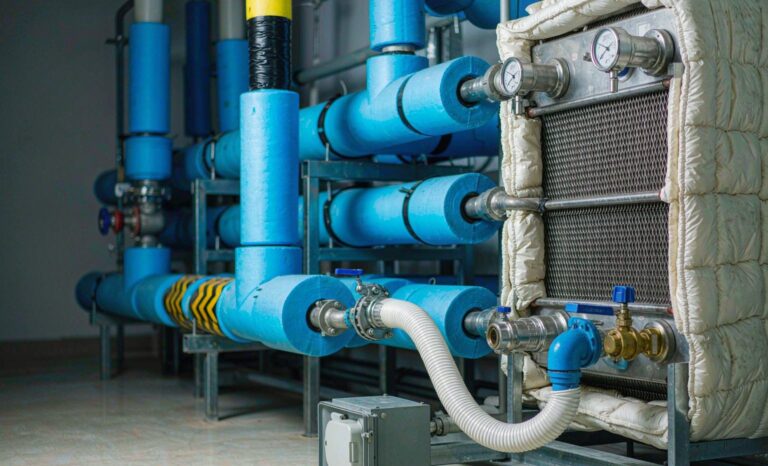 Refrigeration Desuperheater: Turning Compressor Superheat into Free Hot Water
How a refrigeration desuperheater recovers 10-20% of compressor heat rejection as 55-65 C hot water: sizing, pressure drop limits and payback.
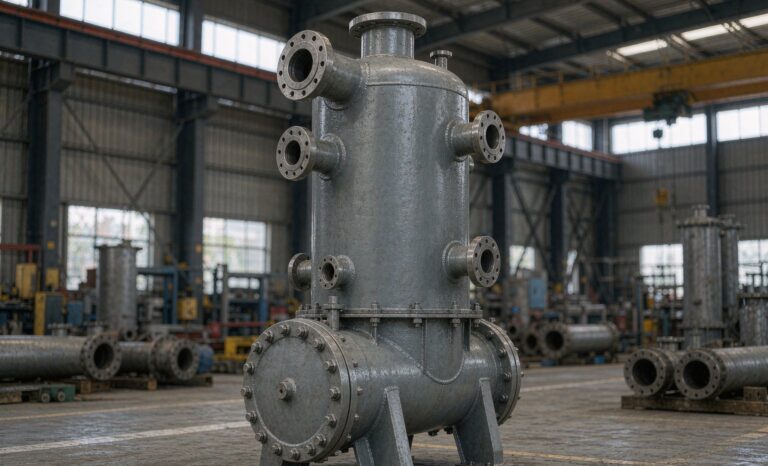 Thermosiphon Reboiler Design: Vertical, Horizontal and Kettle Compared
Thermosiphon reboiler design explained: vertical and horizontal circulation, kettle alternatives, and the hydraulic data a fabricator needs to size it.
 Finned Tube Heat Exchanger Types: Extruded, Embedded, L-Foot and Welded
Finned tube heat exchanger types compared: extruded, embedded G-fin, L-foot and welded with temperature limits, corrosion logic and selection data.
 Printed Circuit Heat Exchanger vs Shell and Tube: When the Premium Pays
Compare a printed circuit heat exchanger with shell and tube and plate designs: pressure limits, fouling risk and when the premium is justified.
 Heat Exchanger Tube Sheet Design: Thickness, Ligaments and Expansion
Heat exchanger tube sheet design explained: code thickness calculation, ligament efficiency, differential expansion, tube joints and inspection.
 Cold Climate Air Source Heat Pump: Capacity, Defrost and Sizing
How a cold climate air source heat pump really performs: capacity and COP at minus 15 C, defrost strategy, buffer volume and bivalent sizing.
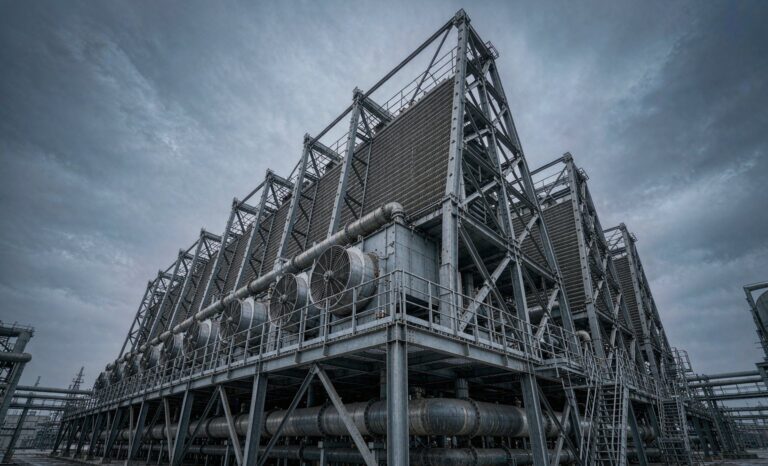 Air Cooled Condenser for Power Plants: Vacuum, Fans and Freeze Protection
How an air cooled condenser for power plants is sized: back pressure, ITD, bundle geometry, fan power, wind recirculation and freeze protection.
 Electrolyzer Cooling Heat Exchanger: Plate Selection for PEM and Alkaline Stacks
Electrolyzer cooling heat exchanger selection for PEM and alkaline stacks: heat load, purity limits, copper-free materials and heat recovery options.
 IQF Freezer Heat Exchanger: Glycol Loop Design for Individual Quick Freezing
How to size an IQF freezer heat exchanger: heat load from throughput, the glycol-ammonia temperature stack, materials and approach temperature.
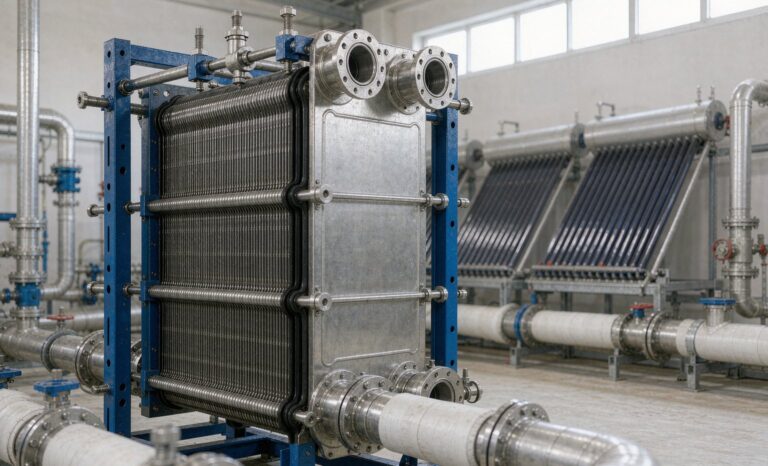 Solar Thermal Heat Exchanger: Sizing the Collector Loop and Storage Tank
A solar thermal heat exchanger sets collector inlet temperature and annual yield. Sizing rules, approach temperature and glycol limits for solar systems.
 Plate and Shell Heat Exchanger: When It Beats Gasketed Plate and Shell and Tube
A plate and shell heat exchanger combines round-plate efficiency with welded pressure containment. Learn when it beats gasketed plate and shell and tube.
 Geothermal Heat Pump Heat Exchanger: Ground Loop Selection Guide
Geothermal heat pump heat exchanger selection: glycol viscosity, approach temperature penalty, plate versus shell and tube, and the pressure drop budget.
 Thermal Oil Heat Exchanger Design: Selection Guide for Hot Oil Systems
Thermal oil heat exchanger selection guide: oil velocity, film temperature, expansion case and the shell and tube versus plate decision at 250-320 C.
 Air Cooled Condenser Sizing: Matching Heat Rejection for Cold Storage and Refrigeration
Air cooled condenser sizing explained: total heat rejection, design temperature difference, ambient and altitude corrections, and coil choice.
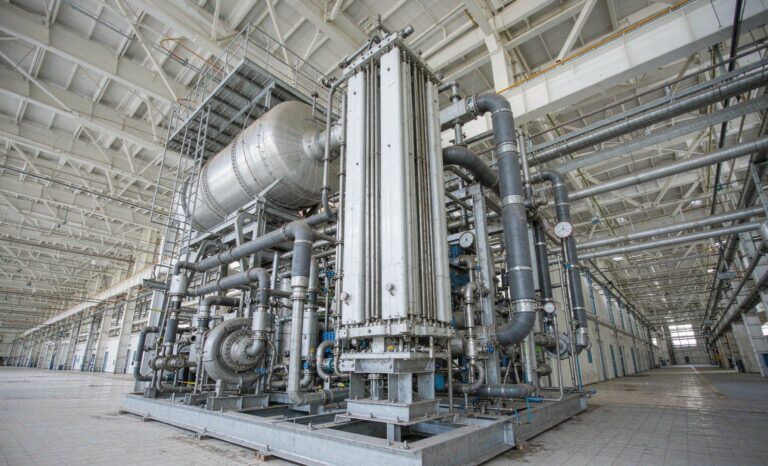 MVR Falling Film Evaporator: Heat Exchanger Selection for Zero Liquid Discharge
How an MVR falling film evaporator sizes its heat exchanger: effective temperature difference, compressor lift, specific energy and materials.
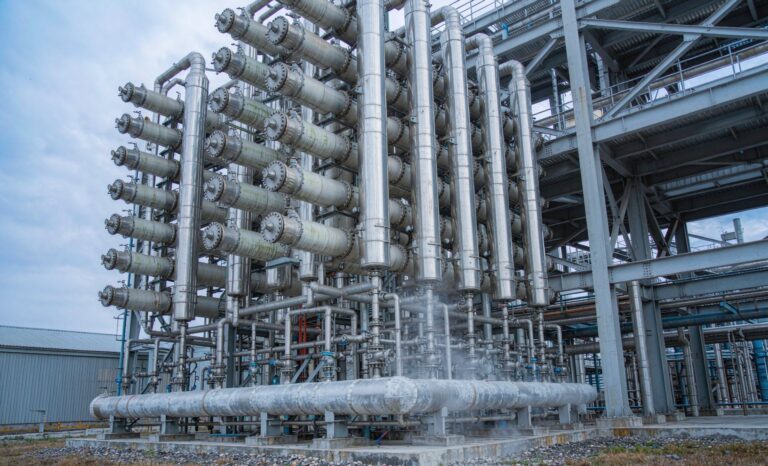 Cryogenic Heat Exchanger for LNG: Choosing the Right Vaporizer Type
How to specify a cryogenic heat exchanger for LNG: vaporizer types, low-temperature materials, thermal shock limits and the key datasheet numbers.
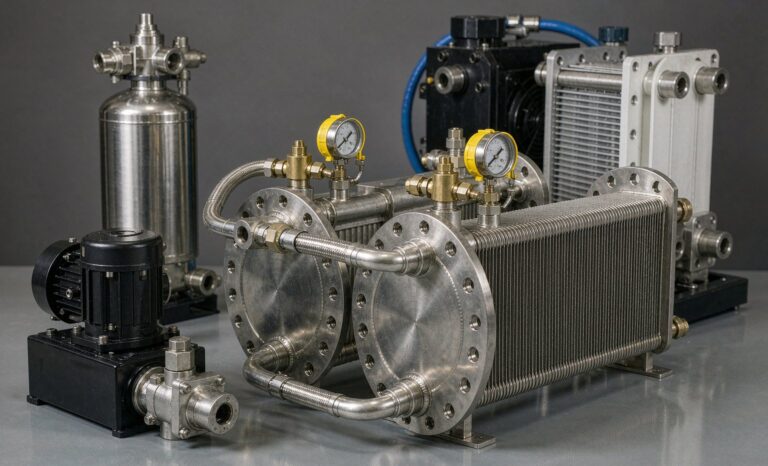 Hydraulic Oil Cooler Selection: Sizing, Air-Cooled vs Water-Cooled
Hydraulic oil cooler selection for industrial systems: estimate heat load, choose air or water cooling, size by LMTD and protect against cold-start damage.
 Biogas Digester Heating Heat Exchanger: Selection Guide for Anaerobic Digestion
Choose a biogas digester heating heat exchanger that holds 35-40C through winter: duty calculation, exchanger type, struvite fouling and materials.
 High Temperature Industrial Heat Pump for 90°C Steam: Selection and Payback
Specify a high temperature industrial heat pump for 90C steam: temperature lift, refrigerant choice, load profiling and payback modelling for plant engineers.
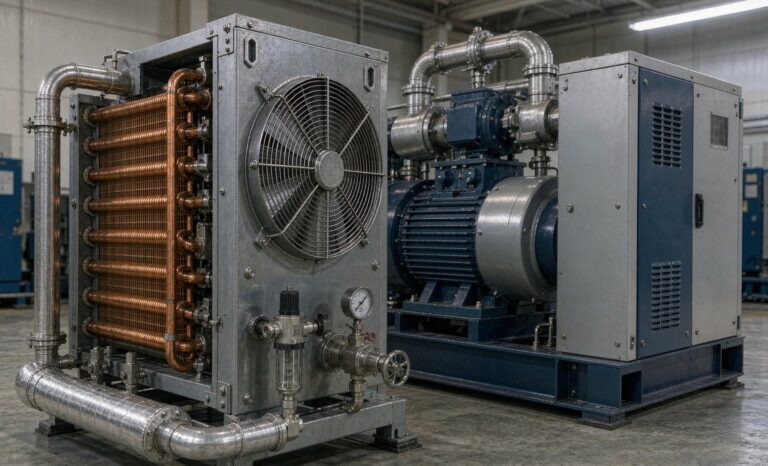 Compressed Air Aftercooler Selection: Air-Cooled or Water-Cooled?
A compressed air aftercooler removes 70-90% of compressor heat. How to size the duty, choose air-cooled or water-cooled, and keep pressure drop low.
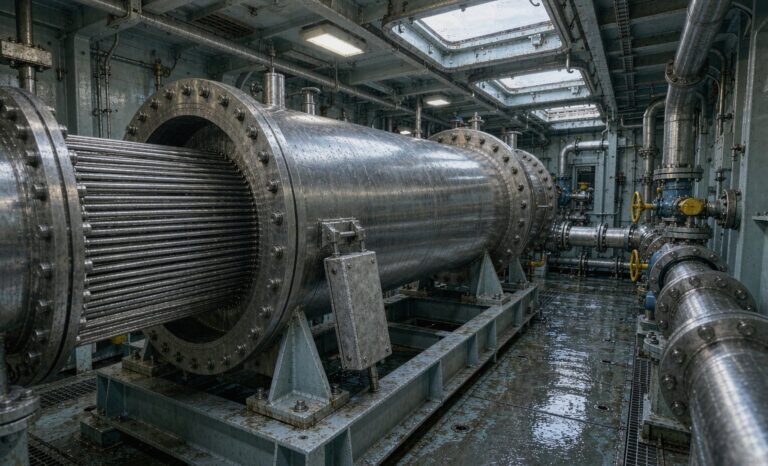 Titanium Seawater Heat Exchanger vs Cupronickel: Marine Cooling Guide
A titanium seawater heat exchanger survives the chlorides that destroy stainless steel. Compare titanium, cupronickel and duplex, and set velocity limits.
 Data Center Liquid Cooling Heat Exchanger: CDU Selection Guide
A data center liquid cooling heat exchanger sets the approach temperature, pressure drop and coolant quality a CDU loop can hold. How to specify it right.
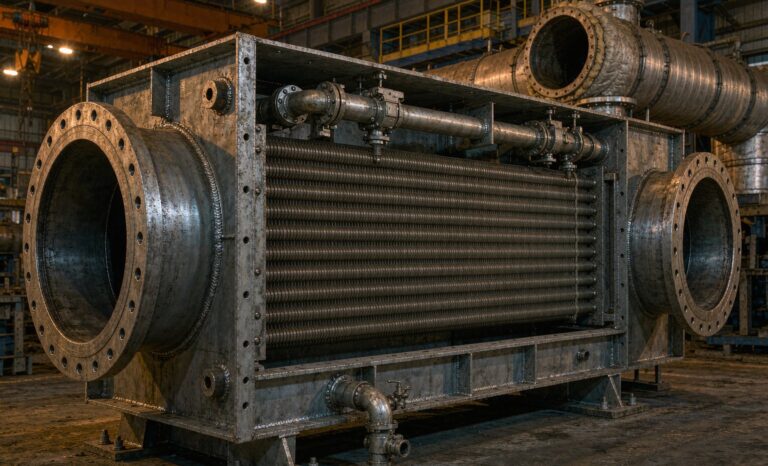 Flue Gas Heat Exchanger Design: Recovering Boiler Stack Heat Without Acid Corrosion
How to design a flue gas heat exchanger that recovers boiler stack heat safely: acid dew point limits, condensing vs non-condensing, tube geometry.
 Sanitary Plate Heat Exchanger for Dairy and Food Processing: Selection Guide
How to specify a sanitary plate heat exchanger for dairy and food lines: hygiene standards, CIP compatibility, plate and gasket materials, regeneration.
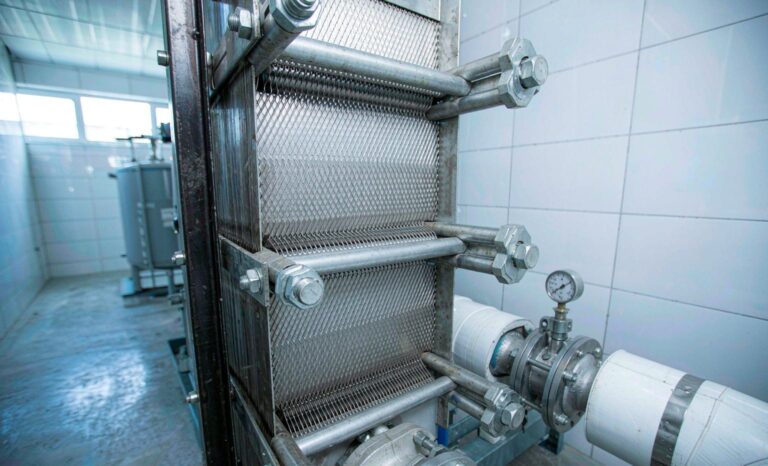 Chilled Water Plate Heat Exchanger: Selection Guide for HVAC Plants
How to select a chilled water plate heat exchanger for HVAC plants: duty data, approach temperature, pressure drop, fouling and free-cooling checks.
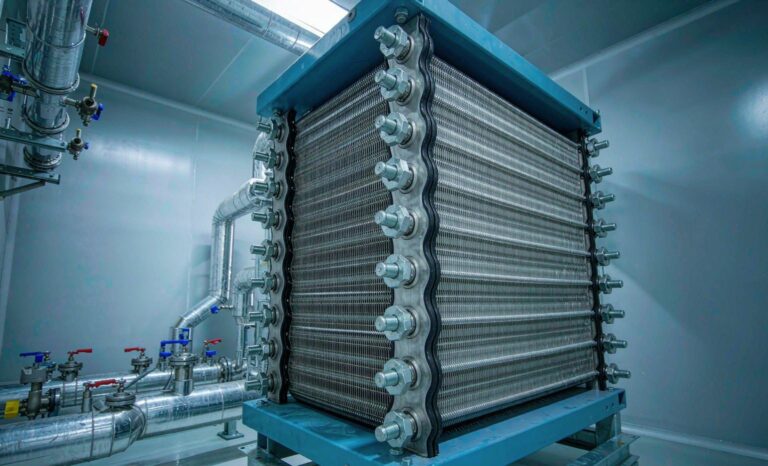 Ammonia Refrigeration Heat Exchanger Selection: Plates vs Shell and Tube
How to select an ammonia refrigeration heat exchanger: plate versus shell and tube, charge reduction, copper-free materials and correct gasket choice.
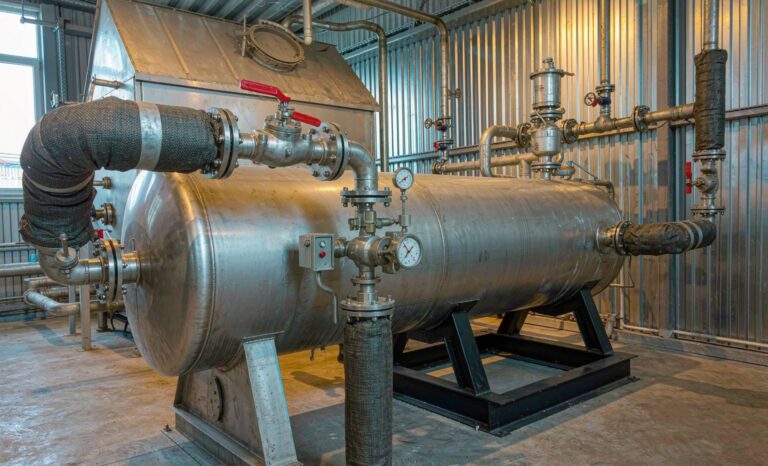 Shell and Tube Heat Exchanger for Steam: Sizing and Selection Guide
Sizing a shell and tube heat exchanger for steam: LMTD, U-values, surface margin, condensate drainage and steam trap selection for reliable steam duty.
 TEMA Shell and Tube Heat Exchanger Types: BEM vs BEU vs AES Explained
BEM, BEU, AES or AEW? Compare TEMA shell and tube heat exchanger types and learn which rear head suits dirty service, high pressure or high temperature.
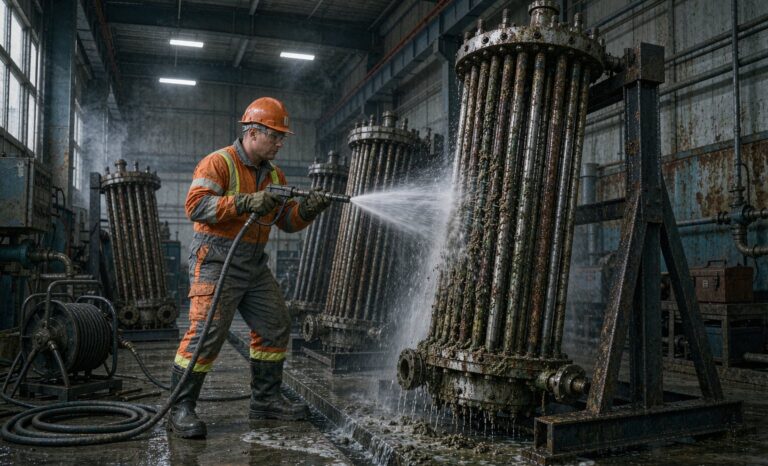 Heat Exchanger Cleaning vs Replacement: How to Run the Break-Even Numbers
Work out when heat exchanger cleaning stops being economic and replacement wins, using the energy penalty, cleaning trend and break-even cost calculation.
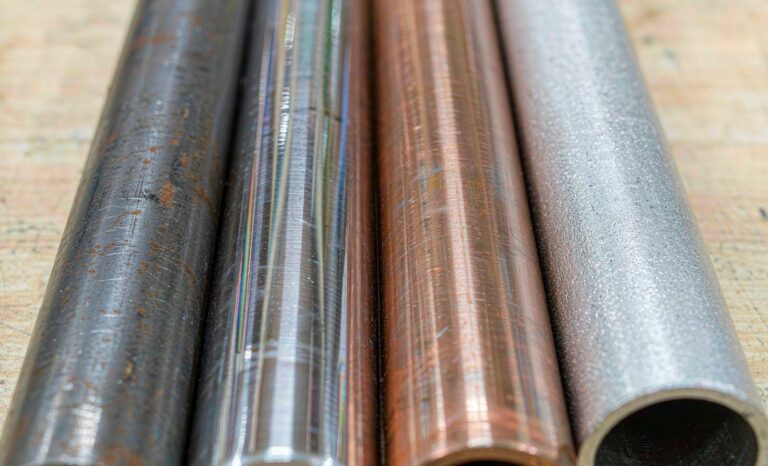 Heat Exchanger Tube Material Selection: Carbon Steel to Titanium
Compare heat exchanger tube materials from carbon steel to titanium and duplex, with the chloride, temperature and velocity rules that decide the grade.
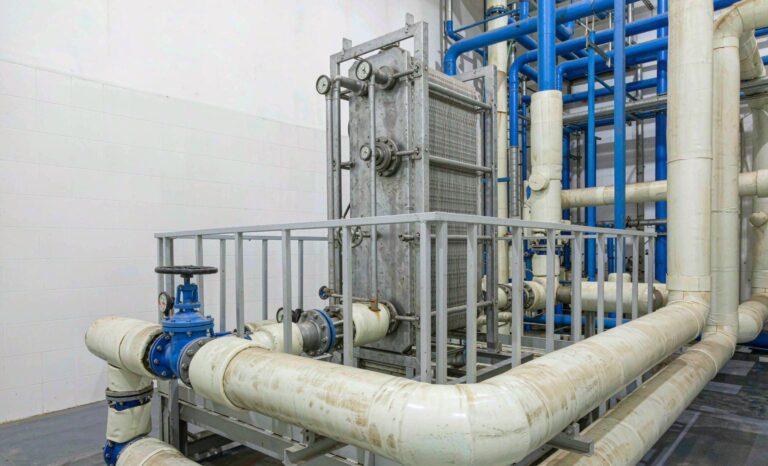 District Heating Substation Heat Exchanger Selection: The Three Numbers That Matter
How to select a district heating substation heat exchanger: approach temperature, pressure rating split and part-load turndown, with a specification checklist.
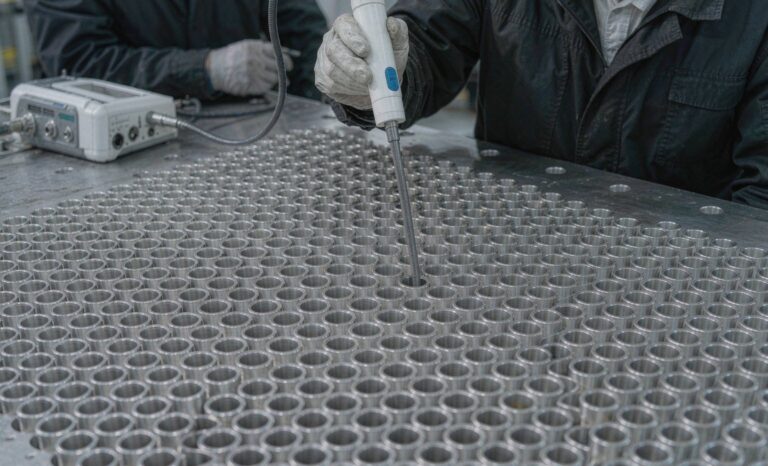 Heat Exchanger Tube Failure: Four Mechanisms and Inspection Intervals That Catch Them
The four mechanisms behind heat exchanger tube failure, plus the inspection method that detects each and how to set a defensible inspection interval.
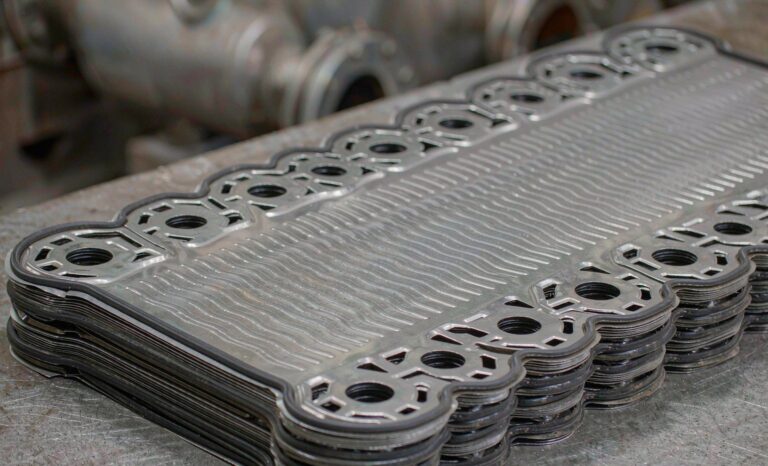 Plate Heat Exchanger Gasket Failure: Four Causes and How to Diagnose Them
Diagnose plate heat exchanger gasket failure: compression set, over-tightening, chemical attack and mechanical damage, with a plate pack inspection checklist.
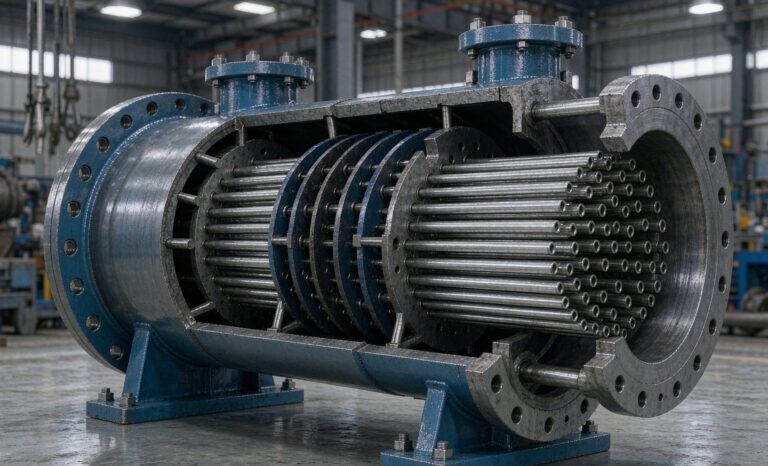 Baffle Spacing in Shell and Tube Heat Exchangers: How to Specify It Right
How baffle spacing controls shell-side velocity, heat transfer and pressure drop in shell and tube heat exchangers, and how to specify it correctly.
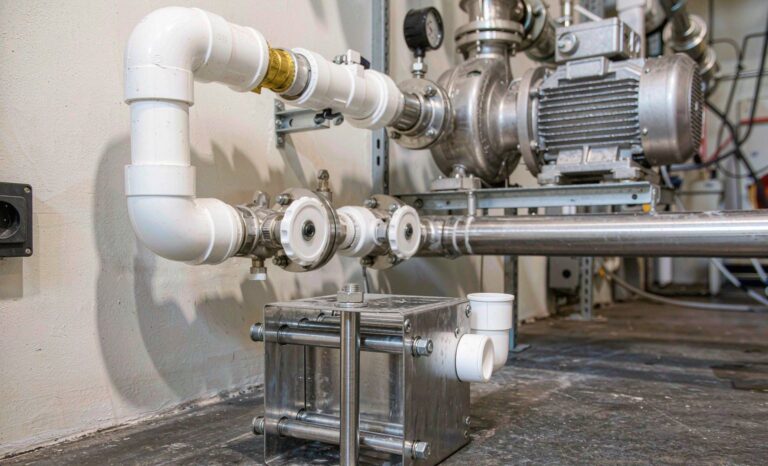 Swimming Pool Heat Exchanger Sizing: A Guide for Commercial Pools
Swimming pool heat exchanger sizing step by step: heat-load calculation, titanium versus stainless selection, flow rates and a commercial pool checklist.
 Dry Cooler vs Cooling Tower: Which Heat Rejection System Fits Your Plant
Dry cooler vs cooling tower compared on water use, leaving temperature, energy and maintenance, plus a selection checklist for plant engineers.
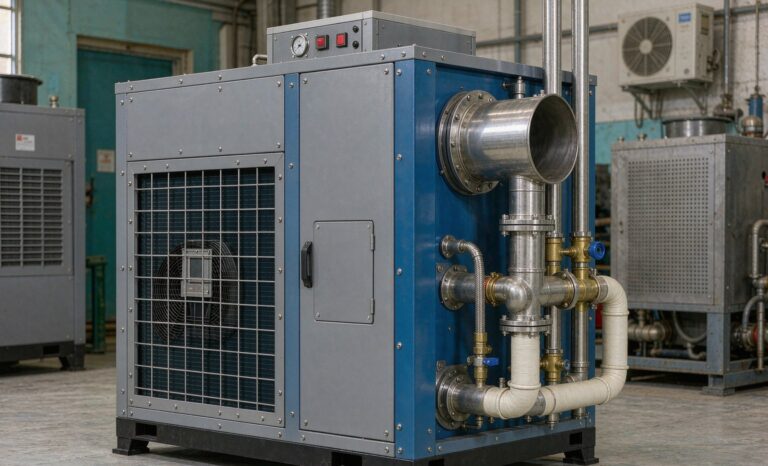 Industrial Heat Pump Payback Period: How to Model ROI for Process Heat
Model the industrial heat pump payback period for process heat: duty, real COP, fuel and power tariffs, and the four costs a simple payback leaves out.
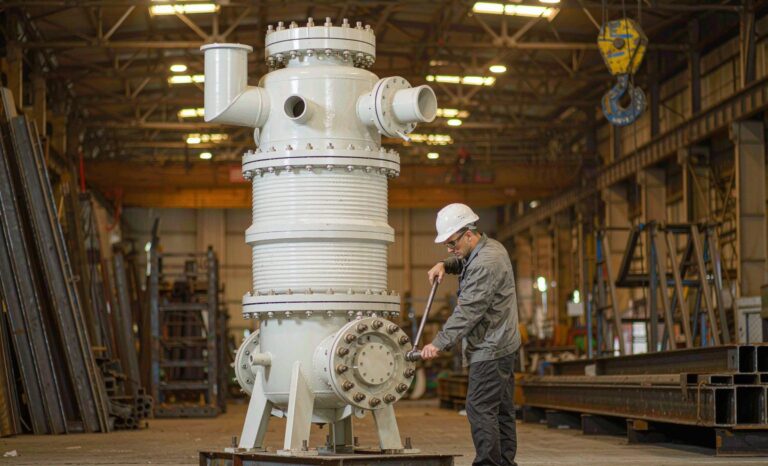 D1/D2 Pressure Vessel Certification: What Heat Exchanger Buyers Must Verify
D1/D2 pressure vessel certification explained: what the certificate covers, the documentation to demand, and how to verify a heat exchanger supplier.
 CO2 Transcritical Heat Exchangers: Gas Cooler Selection for R744 Systems
CO2 transcritical heat exchanger selection: pressure ratings, gas cooler options and materials for reliable R744 refrigeration and heat pumps.
 Chiller Heat Exchanger Selection: Choosing the Evaporator and Condenser
Chiller heat exchanger selection guide: sizing shell and tube or brazed plate evaporators and water-cooled condensers for reliable chiller duty.
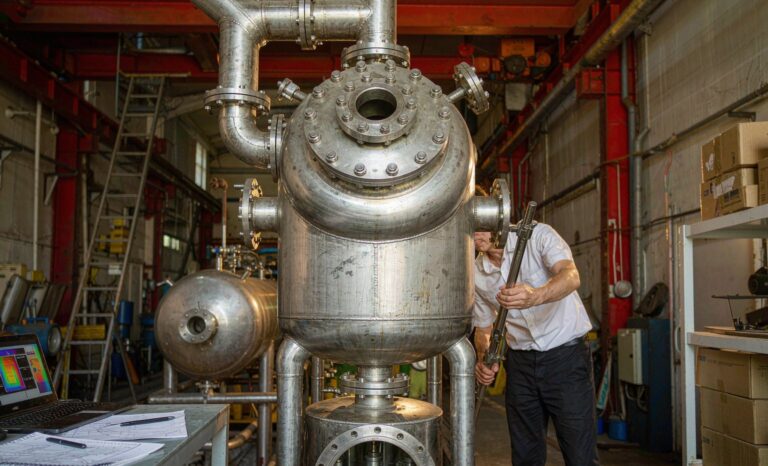 Heat Exchanger Sizing Calculation: A Step-by-Step LMTD Guide for Engineers
A practical heat exchanger sizing calculation: heat duty, LMTD, overall heat transfer coefficient and fouling factor, with a worked example and checklist.
 Brazed Plate Heat Exchanger Selection: Brazed vs Gasketed for Heat Pumps and Refrigeration
Brazed plate heat exchanger selection: compare brazed vs gasketed designs on pressure, refrigerants, cleaning and cost for heat pumps and refrigeration.
 Dry Cooler for Data Center Cooling: Water-Free Heat Rejection and Free Cooling Explained
A dry cooler for data center cooling delivers water-free heat rejection and free cooling. Compare dry coolers, cooling towers and chillers before you buy.
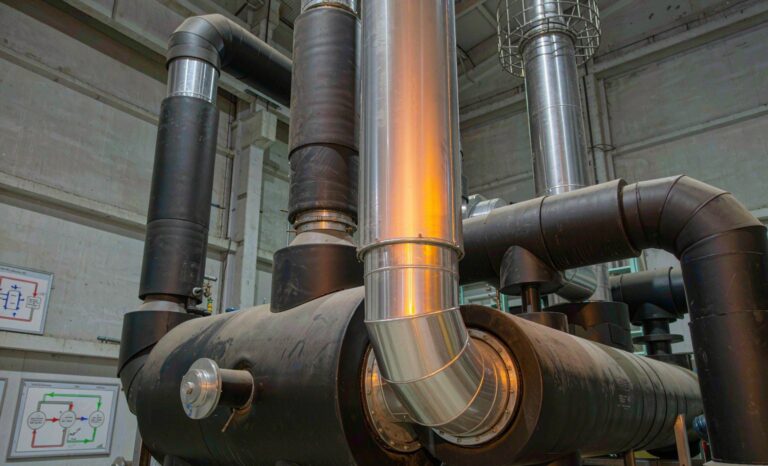 Waste Heat Recovery: How Factories Cut Energy Bills by Up to 30%
Waste heat recovery economics explained: economizer payback worked example, recovery technologies, and corrosion design considerations.
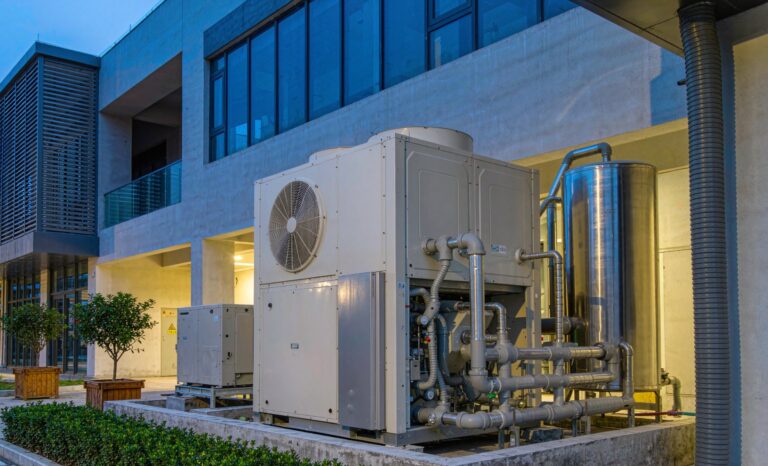 Heat Pump vs Gas Boiler: Efficiency and Total Cost Comparison
Heat pump vs gas boiler compared: COP, operating cost, payback periods, and why the heat exchanger design decides the final efficiency.
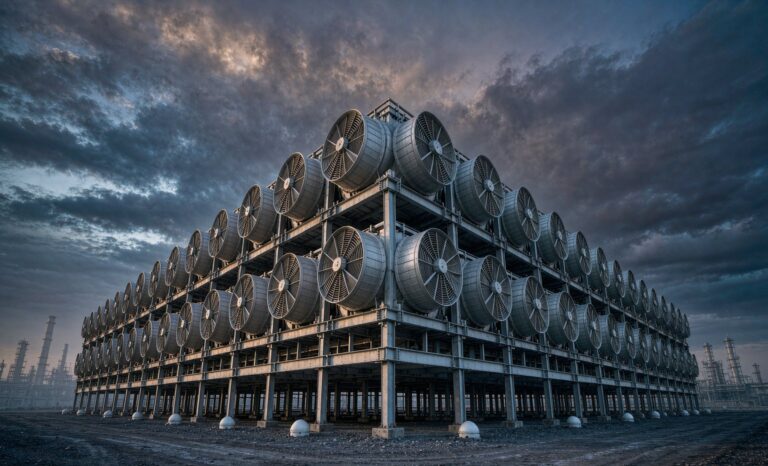 Air Cooled Heat Exchangers (ACHE): Design, Benefits, and Applications
How fin fan air cooled heat exchangers work, air vs water cooled trade-offs, design factors, and where ACHE is the right choice.
 Heat Exchanger Fouling: Causes, Warning Signs, and Prevention Strategies
Why heat exchangers foul, what it costs, warning signs to monitor, and design strategies that prevent scaling, biofilm and corrosion deposits.
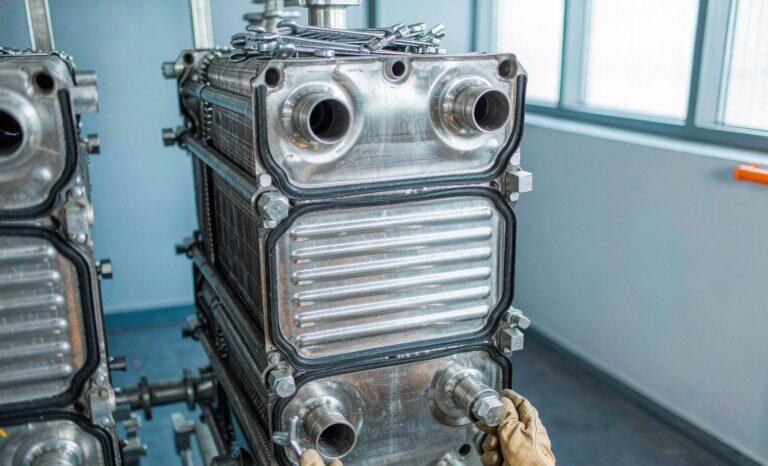 How to Clean and Descale a Plate Heat Exchanger: Step-by-Step Guide
Complete plate heat exchanger cleaning guide: CIP chemical circulation, safe mechanical cleaning, gasket inspection, and fouling prevention.
 Shell and Tube vs Plate Heat Exchangers: Which Is Right for Your Application?
Practical comparison of shell and tube vs plate heat exchangers: pressure limits, efficiency, maintenance, cost, and how to choose the right technology for your application.
Heat exchanger types explained: shell and tube, plate, brazed plate, air cooled and spiral. How each one works, what it costs and how to choose.
Complete shell and tube heat exchanger guide: types, TEMA shells, tube bundles, materials, sizing, standards, cleaning and how to specify one.
Looking for something specific?
Browse the full topic index or send our engineers your duty points and we will size the exchanger for you.
