
Why This Decision Matters More Than the Price
China builds a very large share of the world’s heat exchangers, and the reason is not price. It is that the whole manufacturing chain sits close together: plate, tube, forgings, welding, coating and third party inspection are all within a few hundred kilometres of each other. A Chinese heat exchanger supplier can therefore quote a pressure vessel, a test certificate and a shippable price faster than almost anywhere else.
The risk is the same fact seen from the other side. It is easy to buy from a company that has never seen a welding procedure. So the work is not finding the cheapest quote. It is finding a supplier who can be checked. This guide sets out nine checks that separate a heat exchanger factory in China from a trading company, the red flags to watch for, and the exact questions to send before you pay anyone.
A heat exchanger supplier in China who cannot answer the nine questions below is telling you something about the order you are about to place. The checks take about twenty minutes on a phone call, and they are the difference between a heat exchanger in China that arrives on time and one that arrives after the shutdown date.
The 9 Checks Before You Order
1. Is it a factory or a trading company?
This is the question that decides everything else, so ask it first and watch the answer. A factory tells you the plant address, the floor area and what it makes. A trading company talks about “our partners” and “our factory network”. Both are legitimate businesses, but they carry different risk and they should not be priced the same way.
If you are buying a complete heat exchanger rather than a spare part, you want a factory. The margin a trading company takes is real, and so is the chance that your specification is passed down a chain and diluted along the way.
2. Can you see the plant, and will they let you visit?
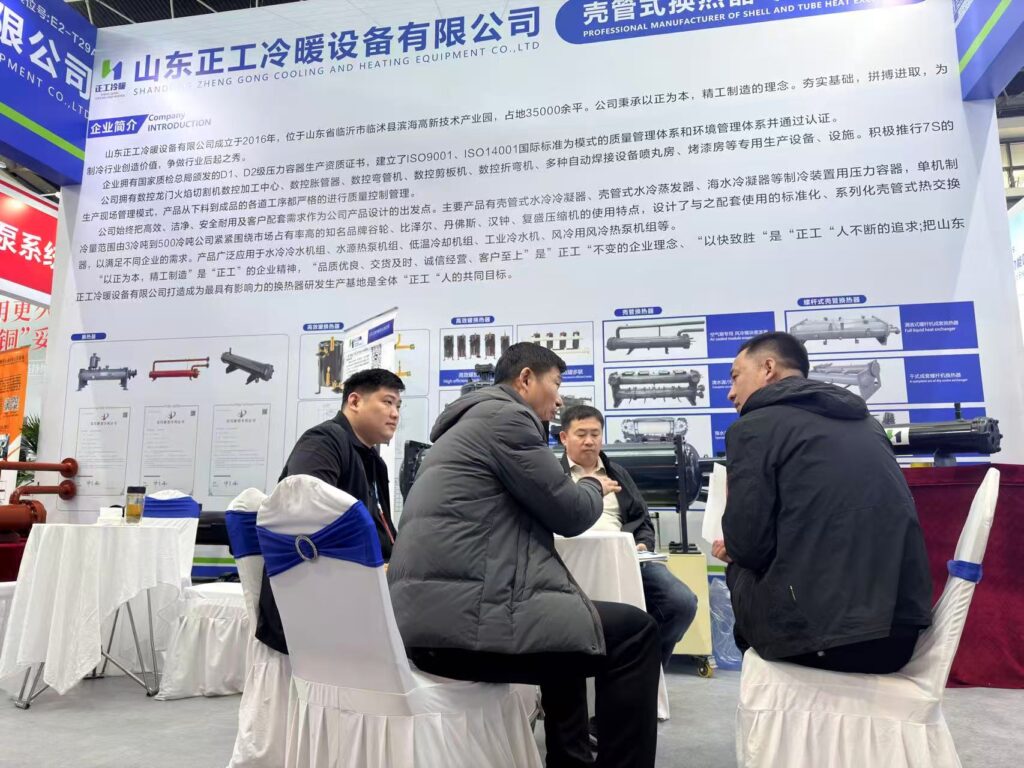
A heat exchanger factory in China that is confident about its work will send you photographs of the shop floor, a floor plan, and photographs of the equipment they will use on your job. A supplier that will not is telling you something. Many will host a factory audit or a video walk through, and for a first order, ask for one.
Look for the equipment that proves the claim: plate rolling, head forming, a tube expander, a welding bay, a hydrostatic test bench, and material storage. A shop that forms, welds and tests on its own floor is a manufacturer. A shop with a forklift and a container yard is not.
3. Who signs the drawing?
Ask who puts their name to the general arrangement drawing, and whether that person is an engineer in the company or a salesperson. A signed drawing means somebody with technical authority has checked the shell diameter, the tube count, the pass arrangement and the material against your duty. It is the cheapest quality control you will ever get, and it costs nothing to ask.
4. Do they do their own thermal calculation?
Some suppliers order the exchanger from a sub-contractor and resell it. Others design it, build it and test it. You want the second kind. Ask to see the calculation, and check that it includes the log mean temperature difference, the correction factor for the pass arrangement, the fouling allowance and the shell side velocity. If the answer is “our factory will do it”, you are talking to a trader.
5. Which pressure vessel licence do they hold?
A heat exchanger is a pressure vessel, and a commercial one needs a licence that covers the type being built. In China that is the D1 licence for fixed shell pressure vessels or the D2 licence for the higher class. Export buyers also expect ISO 9001 and ISO 14001, and sometimes PED or an ASME U-stamp. Ask for the certificate numbers, not a description of them, and check the scope covers your vessel.
We hold D1 and D2 pressure vessel approval with ISO 9001 and ISO 14001, and the certificates are on the site with the audit scope described.
6. Will you get the test records and the material certificates?
Every vessel should be hydrostatically tested at its design pressure, and you should receive the record. Along with it you should get mill certificates for the plate and the tube, a weld map, the welder qualifications, the NDT report where it applies, and a manufacturing data report. If those documents are not in the quotation, assume they are not going to be produced, and price that risk in.
7. Can they build it in your material?
Ask what they will build it in and why. A good supplier asks what the fluid is, what the temperature and pressure are, and what has corroded before, and then proposes a shell and tube material combination. On a closed water loop the answer is usually carbon steel. On seawater it is cupronickel or titanium, with a lined or coated carbon steel shell. On a chemical duty it may be 316L, duplex or alloy lined. A supplier who quotes one grade for every job is not engineering your duty.
Our tube material selection guide sets out the full range from carbon steel to nickel and graphite lining.
8. Who handles the export documents, and on what terms?
Ask who prepares the export packing list, the certificate of origin and the shipping documents, and whether they are on your side of the transaction or the factory’s. A supplier with its own export department will tell you the port, the lead time, the freight cost and the Incoterm without hesitating. One that does not will hand the whole job to a forwarder and you will be chasing two companies instead of one.
9. Is the lead time a production slot or a guess?
Three to six weeks is realistic for a standard shell and tube or plate unit. Larger shells, special materials and complex geometry run longer. The question is not the number, it is whether the number is a slot in a production plan or an aspiration. Ask what is in front of your job on the shop floor, and get the committed date in the order.
What the Red Flags Look Like
None of these are fatal on their own, but two or three together mean you are dealing with a trading company and should price accordingly.
- The price is far below the market with no explanation of how it is achieved.
- No drawing is offered before the deposit.
- The enquiry is answered by email within minutes, with a price, and no technical questions.
- Test certificates, material certificates and the drawing are all “to be provided with the shipment”.
- The supplier is unwilling to say which plant will build the unit.
- Payment is requested by a company that is not the company on the quotation.
- The vessel is described by a type name only, with no shell diameter, tube count, area or material.
Questions to Send Before You Order
Copy these into your enquiry. The answers are what separate a supplier you can trust from one you cannot.
- Which company manufactures the unit, and what is the plant address?
- Who will sign the general arrangement drawing, and when will I receive it?
- Please send the thermal calculation, including the LMTD, the correction factor and the fouling allowance you have used.
- Which pressure vessel licence applies to this vessel, and can you send the certificate?
- What is the shell, tube and closure material, and why did you select it for my fluid?
- What is the test scope, and which records will be in the manufacturing data report?
- What is the production slot, and the date you commit to in the order?
- Which Incoterm and port will you quote, and who prepares the export documents?
- Who is my named contact, and who is the backup if I need a spare part in five years?
How Zhenggong Answers Each One
For comparison, here is what a heat exchanger supplier in China should be able to answer, and what we answer.
| Check | What we do |
|---|---|
| Factory or trader | Our own plant: 35,000 m2 in Binhai Hi-Tech Industrial Park, Linshu County, Linyi City, Shandong. Cutting, forming, welding, assembly and test all on our own floor. |
| Drawing | Our own design department issues the general arrangement drawing and the specification sheet with the quotation. |
| Calculation | In-house thermal design to TEMA and GB/T 150, with LMTD, the pass arrangement correction factor, the fouling allowance and the shell side velocity checked. |
| Licence | D1 and D2 pressure vessel approval, ISO 9001 and ISO 14001. PED and ASME U-stamp on request at enquiry stage. |
| Material | Carbon steel, 304/304L, 316/316L, duplex 2205, titanium Gr.2, cupronickel 90/10, nickel 200/400 and graphite lined, selected against your fluid. |
| Records | 100% hydrostatic test, with mill certificates, weld map, NDT report and a full manufacturing data report in the document pack. |
| Export | Our own export department: FOB, CIF, CFR or DAP, from Qingdao or Shanghai, with the certificates of origin prepared in house. |
| Lead time | Three to six weeks for standard units, with a production slot rather than an estimate. |
The full factory profile, the product range and the certification detail are on our heat exchanger supplier in China page, and the equipment itself is in the product range.
What Kind of Heat Exchanger Are You Buying?
Once you are satisfied the supplier is real, the next question is which type you actually need. It is worth getting right before the enquiry, because the type decides the price. Our heat exchanger types guide covers all ten families, and the shell and tube heat exchanger guide goes deep on the one that handles the hardest duties. If you would rather not work it out yourself, the duty calculator returns the area, the correction factor and the tube count for any arrangement, and our engineers will size a heat exchanger in China to your numbers.
Frequently Asked Questions
How do I know if a heat exchanger supplier in China is a real factory?
Ask three questions: where is the plant, who signs the general arrangement drawing, and can you visit. A factory answers all three directly. A trading company has to go and find a factory for you, which adds a margin, a delay and a quality risk you cannot see.
What should a heat exchanger quotation from China include?
A general arrangement drawing, a specification sheet, the design code (ASME Section VIII, GB/T 150 or PED), the material grades, the pressure vessel licence, the test scope, the delivery term and the lead time. A price on its own tells you nothing.
Which certificates should a Chinese heat exchanger factory hold?
A pressure vessel manufacture licence covering the vessel type – in China that is the D1 or D2 licence – plus ISO 9001 for quality management and ISO 14001 for environmental management. For an export buyer, a D1 and D2 licence with ISO 9001 and 14001 is the standard baseline.
Is it cheaper to buy a heat exchanger through a trading company?
Usually not, once you price the risk. A trading company adds its margin and a quality check you do not control, and the lead time moves with their factory rather than yours. The one case where a trader wins is a single small spare part that a factory will not bother to quote.
How long does a heat exchanger order from China take?
Three to six weeks for a standard shell and tube or plate unit, plus sea freight. Complex units, large diameters and special materials run longer. Ask for a production slot, not an estimate, and get it in the contract.
What payment terms are normal for a heat exchanger order from China?
30% advance with the balance against the copy bill of lading is the usual arrangement, and L/C at sight is common on larger projects. FOB, CIF, CFR and DAP are all normal trade terms and the Incoterm should be written into the order.
Send Us the Duty
Eight numbers are enough for a real quotation: both fluids, both flow rates, four temperatures, both design pressures, the allowable pressure drop and the material. Send them and you will have a sized unit, a general arrangement drawing, a specification sheet and a firm price within one working day. Start with the duty calculator and specification builder, or send the numbers straight to our engineers.
