
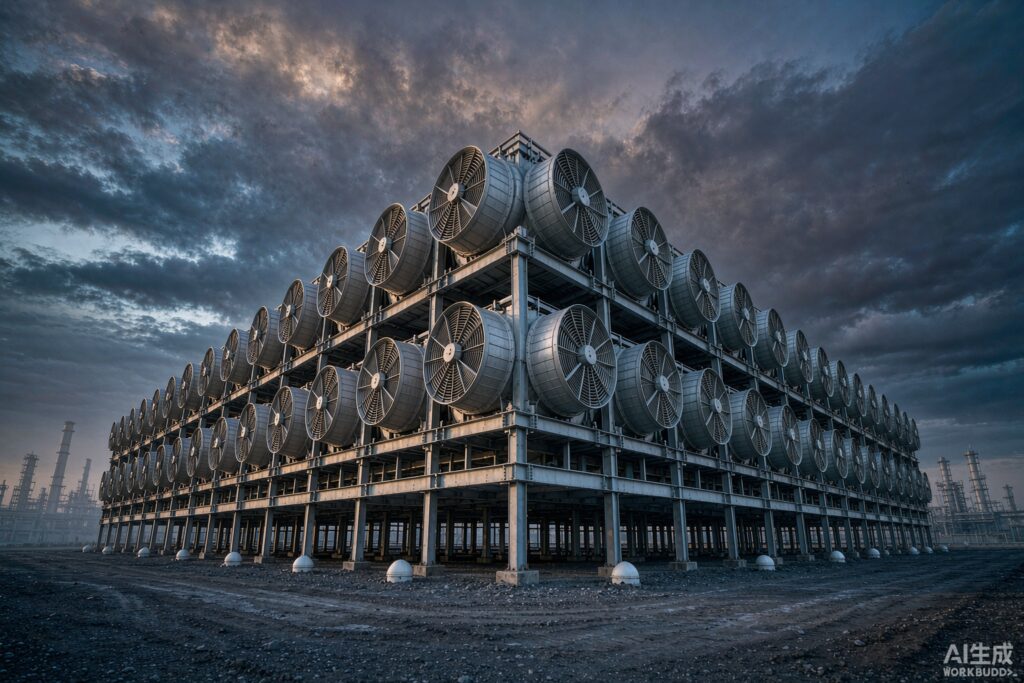
Air cooled heat exchangers (ACHE) — sometimes called fin fan coolers — do what the name says: they reject process heat directly to ambient air, no cooling water required. In water-scarce regions, remote plants, and applications where a cooling tower is impractical, they are the default choice. Here is how they work, when to choose them, and what to watch for.
How an Air Cooled Heat Exchanger Works
Process fluid flows through a bank of tubes fitted with dense aluminum fins. Axial fans force ambient air across the fin surface, carrying heat away. Because air-side heat transfer is naturally weak, the fins multiply the effective surface area 20–30×, and design focuses on optimizing the balance between fan power and surface area.
Typical Applications
- Oil and gas: cooling of hydrocarbon streams, condensers at remote well sites
- Power generation: steam condensation in dry-cooled plants
- Chemical and petrochemical: process coolers where water quality is poor
- Refrigeration and HVAC: condensers for industrial refrigeration plants
Air Cooled vs Water Cooled: The Real Trade-offs
| Factor | Air cooled | Water cooled |
|---|---|---|
| Water consumption | Zero | High (evaporation, blowdown) |
| Ambient temperature dependence | Strong — performance drops on hot days | Moderate |
| Footprint | Large | Compact |
| Winter freeze risk | None (with proper control) | Requires glycol/heat tracing |
| Operating cost driver | Fan power | Pumps + water treatment |
Design Factors That Decide Success
Design air temperature. The exchanger must still meet duty on the hottest expected day — a common root cause of underperformance is an optimistic ambient assumption.
Fin type and pitch. Wide fin spacing tolerates dusty environments; dense fins boost capacity but foul easily in dirty air.
Fan selection and noise. Variable-pitch or variable-speed fans trim power in cool weather and reduce noise — increasingly a regulatory requirement near residential zones.
Bundle orientation and recirculation. Poor layout lets hot exhaust air recirculate back into the intake; wind walls and correct bay spacing prevent it.
Maintenance Profile
Air cooled units trade water-side problems for air-side ones: fin cleaning (compressed air or water wash), fan drivetrain lubrication, and vibration monitoring. Compared with tube-side water fouling, air-side fouling is cheaper to manage and rarely forces unplanned shutdowns.
When Zhenggong Recommends ACHE
Zhenggong Cooling and Heating Equipment engineers air cooled, shell and tube, and plate exchangers, and selects the technology honestly per project. We specify ACHE where water is scarce or expensive, for remote unattended sites, and for fluids that must stay above freezing — and we recommend alternatives when very close approach temperatures matter. Our engineering consultation covers the full trade study.
Conclusion
Air cooled heat exchangers eliminate water consumption at the cost of footprint and hot-day derating. Specify them with honest design air temperatures, dust-appropriate fins, and fan power optimization in mind. To compare with water-based alternatives, see our heat exchanger selection guide.