
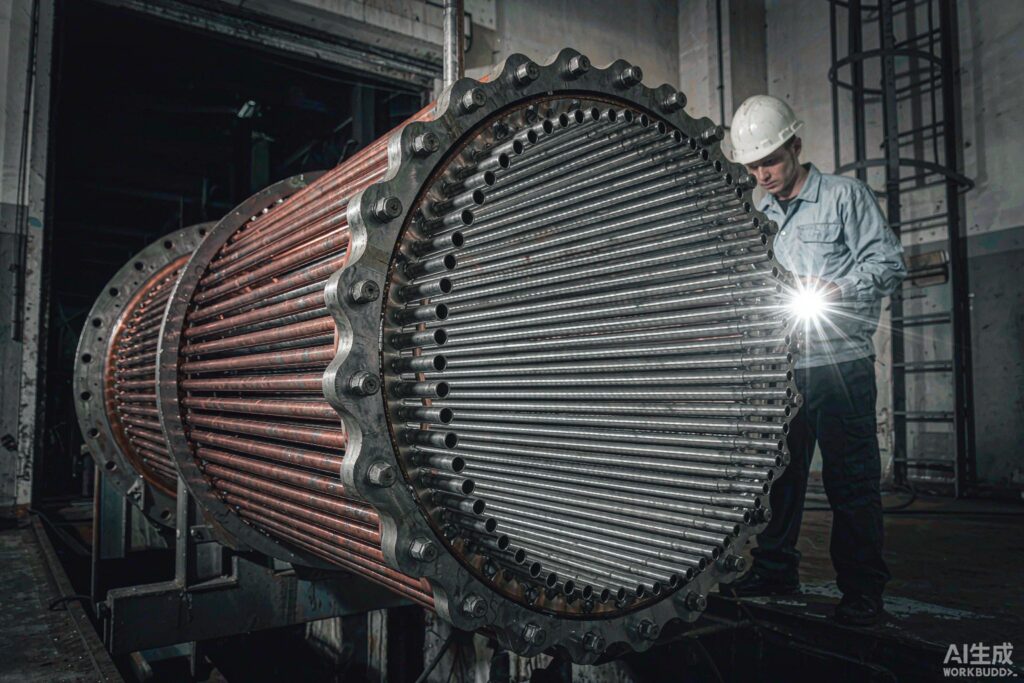
Fouling is the number one silent killer of heat exchanger performance. It acts as an insulating layer between the fluid and the heat transfer surface, quietly stealing efficiency month after month. This article explains what causes fouling, how to spot it early, and — most importantly — how to design it out of your system.
The Five Main Types of Fouling
- Scaling: crystallization of dissolved minerals (calcium carbonate is the classic) on hot surfaces.
- Particulate fouling: suspended solids settling in low-velocity zones.
- Biological fouling: bacteria and algae forming slime films, common in cooling water systems.
- Corrosion fouling: oxidation products creating rough, insulating layers inside tubes and channels.
- Chemical reaction fouling: process fluid decomposing and polymerizing onto surfaces (typical in oil refining).
What Fouling Actually Costs You
A typical fouling resistance of 0.0002 m²K/W can reduce overall heat transfer by 10–20%. In an industrial condenser that translates directly into lost production capacity, higher pump energy from increased pressure drop, and more frequent shutdowns. Over a year, fouling often costs more than the exchanger itself.
Warning Signs to Monitor
| Indicator | Healthy | Fouling suspected |
|---|---|---|
| Approach temperature | Stable at design | Gradually widening |
| Pressure drop | Steady | Climbing month over month |
| Duty at constant flow | Consistent | Declining |
| Pump power | Constant | Rising for same flow |
Design Strategies That Prevent Fouling
The cheapest fouling control happens at the specification stage:
- Keep velocities turbulent. Design flow above ~0.5 m/s in plate channels; turbulence sweeps surfaces clean.
- Choose the right materials. Titanium for seawater, cupronickel or high alloys for aggressive chemistry, smoother surfaces for sticky fluids.
- Allocate fouling resistance realistically. Under-reserving fouling margin causes undersizing; over-reserving wastes surface area. Base it on operating history, not folklore.
- Plan access. Pull-out tube bundles, gasketed plate packs, and clean-in-place ports turn a week of downtime into an afternoon.
Operating Practices That Keep Units Clean
Upstream strainers and side-stream filtration remove particulates before they deposit. Controlled water treatment (pH, biocide dosing, antiscalants) stops scale and biofilm chemistry before it starts. And a simple weekly log of approach temperature catches fouling while it is still reversible with chemical cleaning rather than mechanical work.
Corrosion Deserves Equal Attention
Fouling and corrosion reinforce each other: deposits create local chemistry that attacks metal, and corrosion roughness traps more deposits. Eddy current testing of tube walls every few years catches wall loss decades before failure. Zhenggong manufactures corrosion-resistant exchangers in titanium, high-alloy stainless, and cupronickel, with easy-clean geometries and eddy-current-inspected tube bundles as standard quality practice — see our engineering services for material selection support.
Conclusion
Fouling is inevitable but controllable. Monitor approach temperature and pressure drop, design for turbulence and cleanability, and match materials to your fluid. For more maintenance fundamentals, read our shell and tube vs plate heat exchanger guide.