
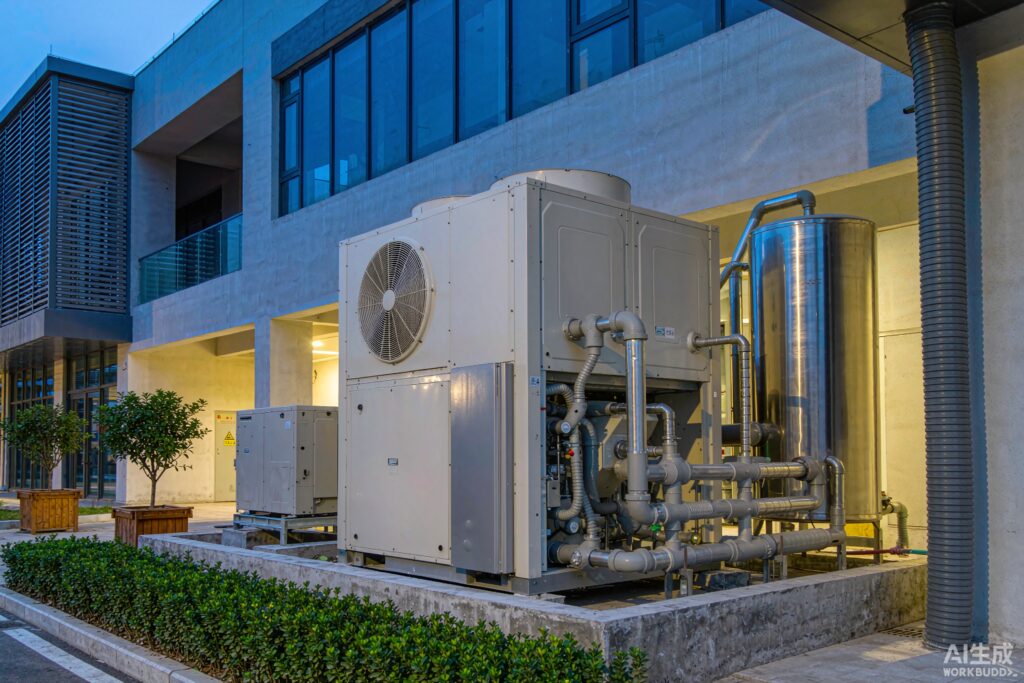
Replacing an aging gas boiler with an industrial or commercial heat pump is no longer a marginal decision — rising gas prices and improving heat pump economics have flipped the math in most markets. This comparison lays out the real numbers: efficiency, operating cost, installation, and total cost of ownership.
The Efficiency Gap Explained
A condensing gas boiler tops out around 90–98% efficiency: you get slightly less heat energy out than the gas energy you burn. A heat pump produces 3–5 units of heat per unit of electricity (COP 3–5), because it moves heat rather than generating it. Even after accounting for power plant losses, the primary-energy advantage is decisive.
Head-to-Head Comparison
| Factor | Heat pump | Gas boiler |
|---|---|---|
| Efficiency (typical) | COP 3–5 (300–500%) | 90–98% |
| Fuel price exposure | Electricity | Gas / LNG |
| Output temperature | Up to ~85–95°C (industrial units) | Up to 90°C+ easily |
| Maintenance | Low — no combustion | Annual flue/combustion checks |
| Emissions on site | Zero | CO₂ + NOx |
| CapEx | Higher | Lower |
Where Heat Pumps Win
- Cheap or green electricity tariffs — with solar or wind PPA power, running cost can drop 50%+ below gas
- Low-temperature heat demand — floor heating, process water below 70°C, district heating return legs
- Waste heat available — an industrial heat pump upgrades 30–50°C waste heat to 80–90°C process heat at outstanding economics
- Carbon pricing / ESG targets — on-site emissions go to zero
Where Boilers Still Make Sense
Very high delivery temperatures (steam above 100°C), extremely cheap local gas, or electricity grids dominated by fossil generation weaken the heat pump case. A hybrid plant — boiler for peak load, heat pump for base load — is often the pragmatic answer.
Payback Reality Check
Typical industrial projects reach payback in 2–6 years when at least one of these applies: gas-to-electricity price ratio is favorable, waste heat is available as a source, or carbon costs are internalized. Beyond payback, heat pumps future-proof the plant against tightening emission rules — retrofits forced by regulation are always more expensive than planned replacements.
Why the Heat Exchanger Is the Heart of Every Heat Pump
Every heat pump lives or dies by its condenser, evaporator, and intermediate heat exchangers. Their approach temperatures directly set the COP: a 1 K improvement in exchanger approach can raise efficiency several percent. Zhenggong Cooling and Heating Equipment manufactures high-efficiency condensers and evaporators with optimized fin patterns and internal enhancements specifically for heat pump duty — the component-level quality that determines whether your system delivers COP 3 or COP 4.5. Details on our engineering services page.
Conclusion
Run the numbers for your tariffs and heat demand profile before deciding. For most plants with sub-90°C demand and sane electricity pricing, the heat pump wins on lifetime cost — and every fraction of a degree of exchanger efficiency compounds that advantage. More component selection help in our heat exchanger guide.