
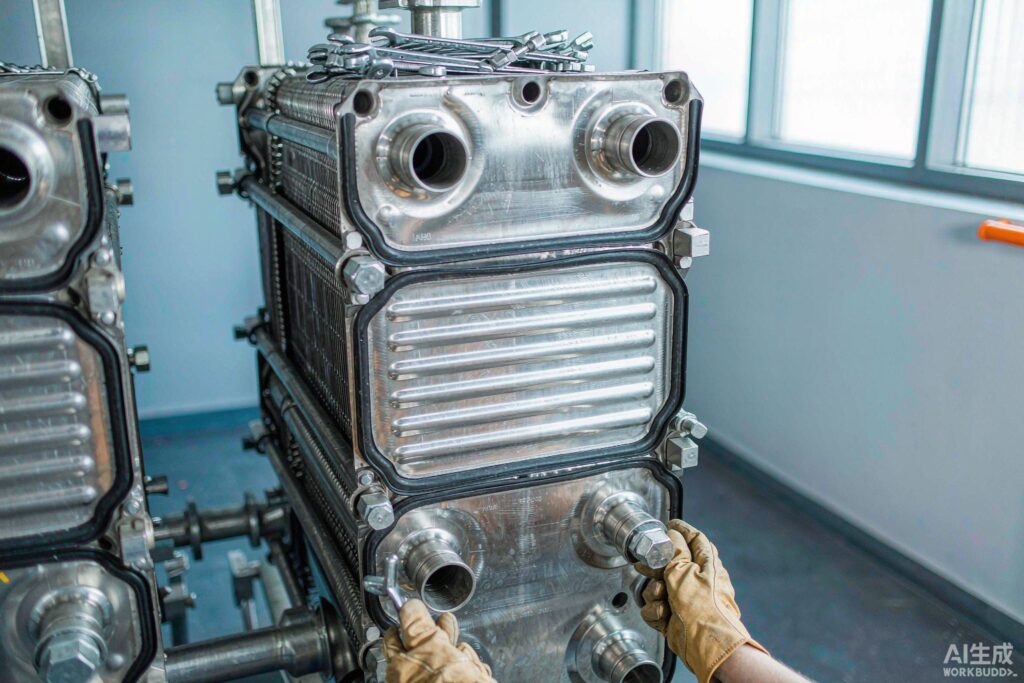
A dirty plate heat exchanger can lose 30–50% of its heat transfer capacity before you ever see a leak. Scale, biological film, and corrosion deposits build up silently inside the narrow plate channels, and energy bills climb while performance drops. This step-by-step guide shows how to clean a gasketed plate heat exchanger safely — and how to keep it clean longer.
Why Cleaning Matters More Than You Think
Plate heat exchangers achieve their famous efficiency through very narrow channels and turbulent flow. That same geometry makes them sensitive to fouling: a deposit layer just fractions of a millimeter thick acts as insulation. Typical symptoms include:
- Outlet temperatures drifting from design values
- Rising pressure drop across the unit
- Reduced flow at the same pump speed
- Longer cycles to reach target temperature
If two or more of these sound familiar, it is time to act.
Step 1: Confirm It Is Fouling, Not a Failure
Before opening the unit, compare current duty against commissioning data. A gradual decline over months points to fouling. A sudden step change usually means a gasket failure, a blocked port, or a cracked plate — cleaning will not fix those, and continuing to run can turn a small repair into a major one.
Step 2: Choose Your Cleaning Method
| Method | Best for | Caution |
|---|---|---|
| Closed-loop chemical circulation (CIP) | Scale, light sludge | Verify chemical compatibility with plates and gaskets |
| Manual cleaning of opened plate pack | Heavy deposits, biofilm | Never use wire brushes or steel tools on plates |
| Backflushing | Suspended solids | Only if the unit is designed for reverse flow |
Step 3: Chemical Cleaning (CIP) Procedure
For calcium carbonate scale, a circulating solution of mild acid (typically 2–5% citric or phosphoric acid) at 40–50°C for 2–4 hours dissolves most deposits. Always:
- Circulate clean water first to flush loose solids
- Keep circulation temperature below gasket limits
- Neutralize and rinse thoroughly before returning to service
Step 4: Mechanical Cleaning — Done Right
Open the frame, slide out the plate pack, and separate the plates carefully. Clean each plate with soft nylon brushes and water. Stubborn spots respond to non-abrasive pads and approved cleaning paste. Inspect every gasket seat while you are in there — a cleaning shutdown is the cheapest moment to replace aging gaskets.
Prevention: The Cheapest Cleaning Is the One You Avoid
Install strainers upstream, keep velocities in the design range (turbulence is self-cleaning), and log duty data weekly so fouling is caught early. Zhenggong Cooling and Heating Equipment builds easy-clean gasketed plate units in titanium and stainless steel for scaling-prone duties, and our team provides maintenance and re-gasketing services worldwide.
Conclusion
Clean plates restore efficiency, cut pumping costs, and extend equipment life. Inspect early, clean gently, and replace gaskets on schedule — your energy bill will thank you. For help choosing fouling-resistant plate materials, see our plate vs shell and tube comparison.