
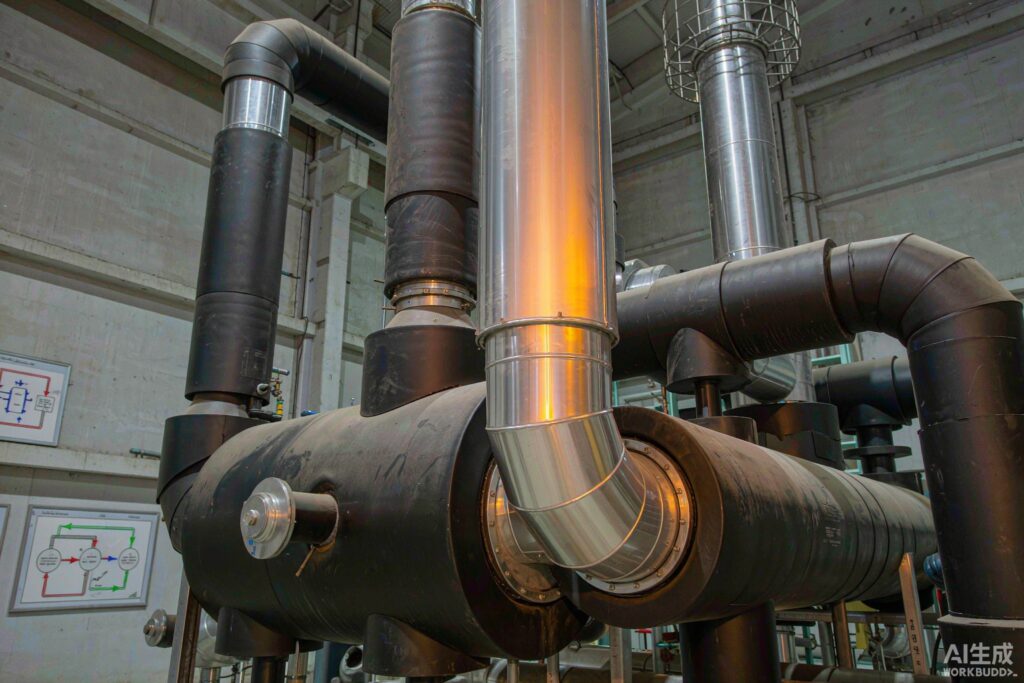
Every furnace, engine, dryer, and kiln dumps enormous amounts of heat into the atmosphere as hot exhaust. Waste heat recovery (WHR) captures that energy before it escapes — preheating feed water, combustion air, or process streams — and routinely cuts fuel bills by 10–30%. Here is how the economics actually work.
The Opportunity in the Flue Gas
Exhaust streams between 150°C and 450°C are the sweet spot: hot enough to yield useful energy, present in almost every industrial site. Above 450°C, gas turbines and reciprocating engines offer even higher-grade recovery. The chart of value vs temperature is monotonic — the hotter the stack, the faster the payback.
Main Recovery Technologies
- Economizers: finned tube bundles in boiler flue gas preheating feed water — the oldest and most proven WHR application
- Air preheaters: recovering heat into combustion air, directly displacing fuel
- Concentric-tube / counterflow units: compact recovery for smaller exhaust ducts
- Condensing recovery: extracting latent heat from flue gas below its dew point, pushing boiler efficiency beyond 98%
A Worked Payback Example
A boiler burning the equivalent of $500,000/year in fuel, with 220°C flue gas, can typically recover 6–8% of input energy with an economizer. Installed cost for a mid-size unit: $40,000–70,000.
| Item | Value |
|---|---|
| Annual fuel saving (7%) | $35,000 |
| Installed cost | $55,000 |
| Simple payback | ~1.6 years |
| 20-year NPV of savings | $400,000+ |
Heavy-industry installations with dirtier gas and larger flows often land between 1 and 3 years payback; small clean applications can beat 12 months.
What Determines Whether WHR Pays Off
Operating hours. A unit running 8,000 hours/year recovers four times the energy of one running 2,000 hours.
Matching heat source to heat sink. Recovered energy is only worth what it displaces — the plant must have a continuous use for the heat at the right temperature level.
Corrosion chemistry. Acid dew points in flue gas dictate minimum metal temperatures and material choice; getting this wrong destroys economizers. Titanium and high-alloy construction survives aggressive condensate.
Pressure drop budget. Every millibar added to the flue gas path costs fan power; the recovery design must balance captured heat against parasitic load.
Typical Results by Industry
- Boiler houses: 5–10% fuel reduction with economizers
- Cement and lime kilns: preheating combustion air and raw materials
- Steel and glass: recuperators and waste heat boilers on furnace exhaust
- Chemical plants: feed-forward preheating of process streams
- Engines and gensets: jacket water and exhaust recovery for CHP
Engineering the Unit — Not Just Buying One
A successful economizer is designed around your actual flue gas analysis, dew point, and turndown profile — catalog units sized optimistically underperform within months. Zhenggong Cooling and Heating Equipment designs and manufactures waste heat recovery units in corrosion-resistant materials with extended-surface tubing, including custom flue gas exchangers for heavy industry, and provides the thermal calculations behind every proposal. Start with a free engineering consultation.
Conclusion
Waste heat is fuel you already paid for. With typical paybacks of 1–3 years and carbon savings that come free with the energy savings, flue gas recovery is one of the highest-ROI upgrades available to any plant. Related reading: our heat exchanger technology comparison.